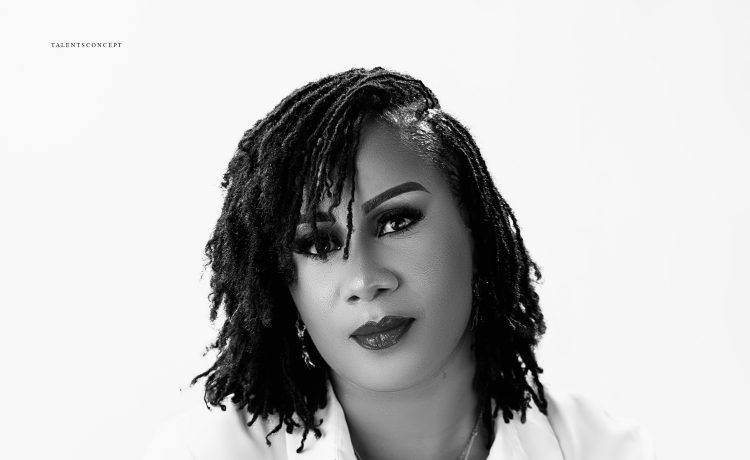
In a world where conversations around mental health, identity, and emotional well-being are becoming increasingly important, Abuja-based visual artist Bella Mfon is using art as a powerful tool for reflection, healing, and self-discovery.
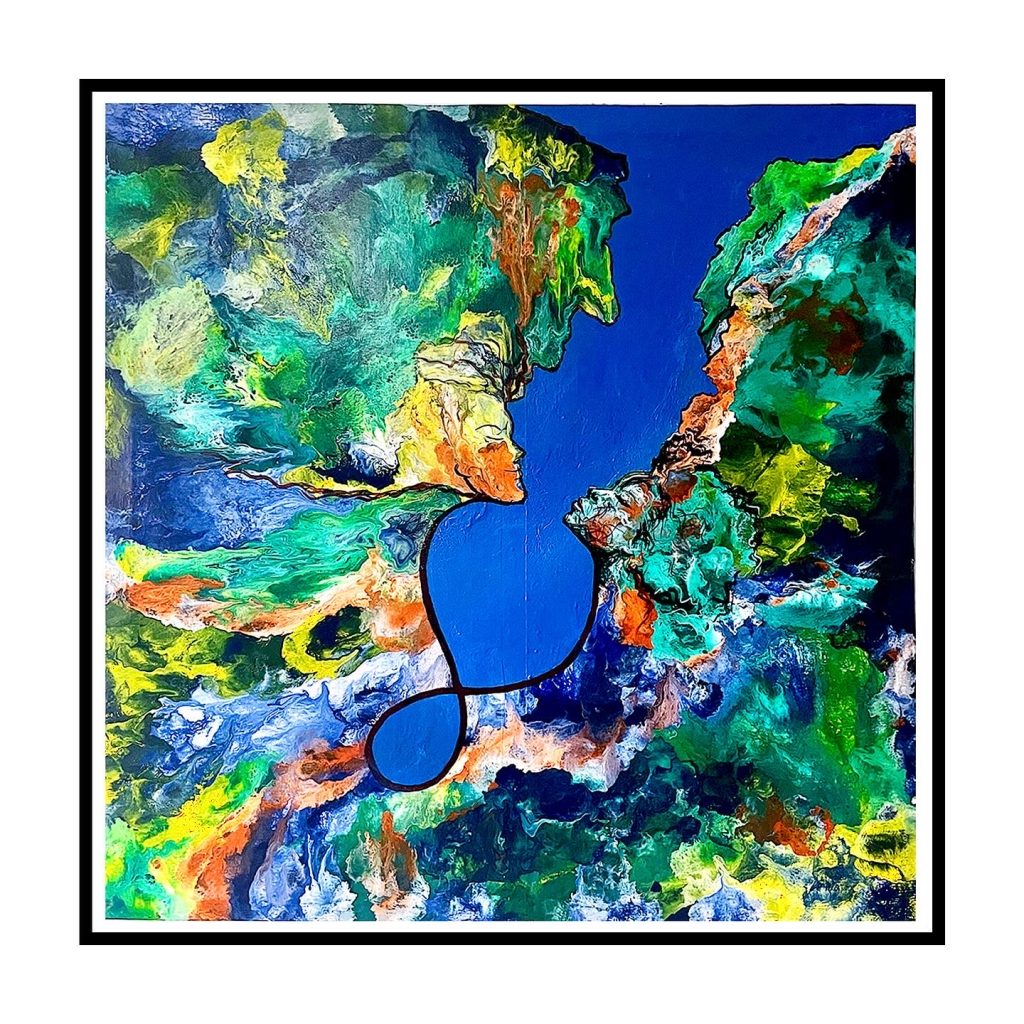
Through expressive portraits, textured compositions, and emotionally charged narratives, the self-taught artist explores the complexities of the human experience, creating works that encourage viewers to embrace vulnerability and find strength in their personal journeys.
With more than five years of artistic practice, Bella has established a distinctive voice within Nigeria’s contemporary art scene.
Her work examines themes of light and darkness, resilience, womanhood, mental wellness, and the often-unspoken emotions that shape our lives.
Drawing inspiration from personal experiences, human relationships, and the world around her, she creates deeply relatable pieces that invite introspection while celebrating authenticity and emotional courage.
Bella’s growing influence has been reflected in numerous exhibitions and art fairs across Nigeria and internationally, as well as collaborations focused on mental health advocacy and arts education.
As a participant in the forthcoming Here & Now: Becoming, Identity, Memory, and Environment exhibition at Thought Pyramid Art Centre, Lagos, she brings a body of work that explores identity, healing, and the transformative power of self-acceptance.
In this exclusive feature, Bella Mfon reflects on her artistic journey, the role of vulnerability in creative expression, and her mission to create art that resonates deeply with the human spirit while inspiring meaningful conversations about mental health, resilience, and personal growth.
AV1: You are a self-taught artist. What inspired you to pursue art professionally, and how has your
journey shaped your creative identity?
Bella: Art began as a personal outlet during a difficult season of my life. What started as a way to process
emotions gradually became a passion and a purpose. Being self-taught has allowed me to develop an
intuitive style that is deeply personal, rooted in experimentation, self-discovery, and honesty.
Because I did not follow a traditional artistic path, I learned to trust my instincts and embrace mistakes as
part of the creative process. Every artwork became both a lesson and a stepping stone.
That journey has shaped my creative identity to value authenticity over perfection and emotional truth over technical expectations.
AV1: Your work is said to echo the spirit of Jackson Pollock. What aspects of his approach resonate most with you, and how have you made that influence your own?
Bella: What resonates most with me is his freedom of expression and the emotional energy in his work. I admire the way he allowed movement, intuition, and emotion to guide his creative process rather than
rigid rules.
There is a sense of honesty in his work that I find inspiring. While I draw inspiration from that spontaneity, I have developed my own visual language through texture, layered colours, and themes centred on healing, resilience, and human emotion.
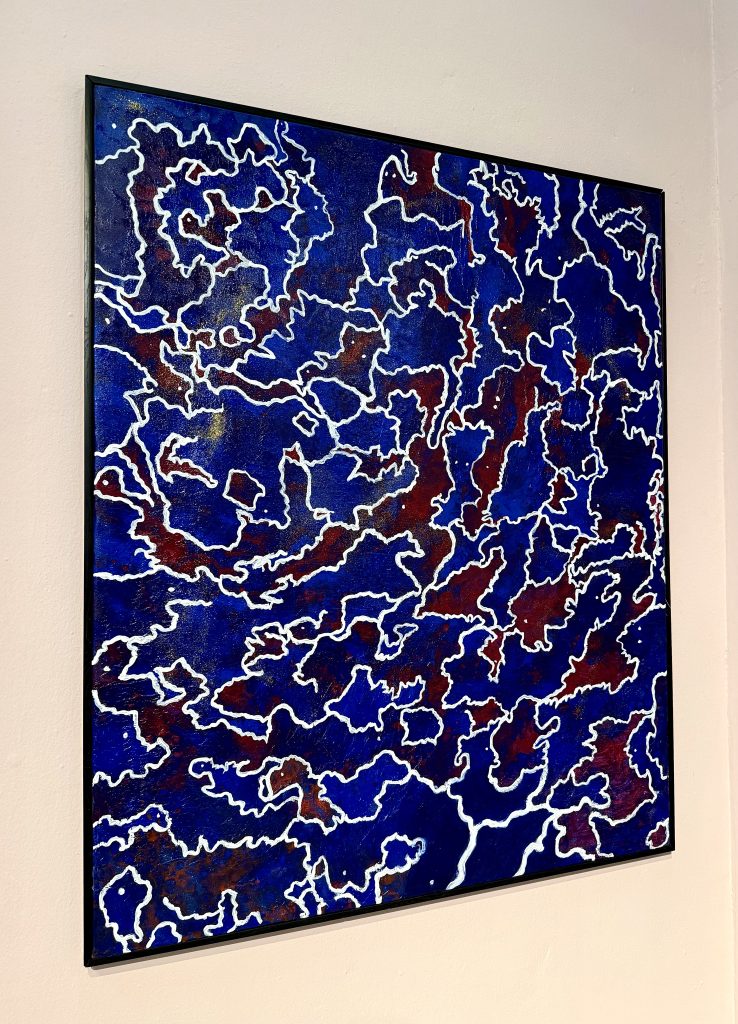
My work is less about recreating Pollock’s techniques and more about embracing the courage to create from a place of vulnerability. I use abstraction as a way to communicate emotions and experiences that are often difficult to put into words.
AV1: Art serves as a therapeutic outlet for you. How does the creative process help you navigate
your own thoughts and emotions?
Bella: Creating allows me to give form to feelings that are often difficult to express in words. The process helps
me reflect, release, and understand my emotions, turning moments of uncertainty into something
meaningful and tangible.
There is something powerful about watching emotions transform into colour, texture, and movement on a canvas.
Art provides me with a safe space where I can be completely honest with myself. It helps me slow down
and listen to thoughts that are often drowned out by the noise of everyday life.
In many ways, painting has become a form of self-care and self-discovery, helping me find clarity even in difficult moments.
AV1: Much of your work explores light and darkness. What do these opposing forces represent in
your life and artistic practice?
Bella: For me, light and darkness represent the realities we all experience – joy and pain, hope and struggle.
My work explores the relationship between both, showing that growth and healing often emerge from our
darkest moments.
I do not see them as opposites that exist separately, but as forces that constantly interact and shape one another.
My personal experiences have taught me that difficult seasons often reveal strengths we did not know
we possessed.
Through my art, I aim to show that darkness is not always something to fear; sometimes it is where transformation begins.
The presence of light within my work serves as a reminder that hope can exist even in uncertainty.
AV1: Mental well-being is a recurring theme in your work. Why do you think it is important for artists
to engage with conversations around mental health?
Bella: Art has the power to create connection and understanding. By engaging with mental health themes,
artists can help normalise difficult conversations, reduce stigma, and remind people that they are not
alone in their experiences. I believe creative spaces can be powerful environments for healing and
reflection.
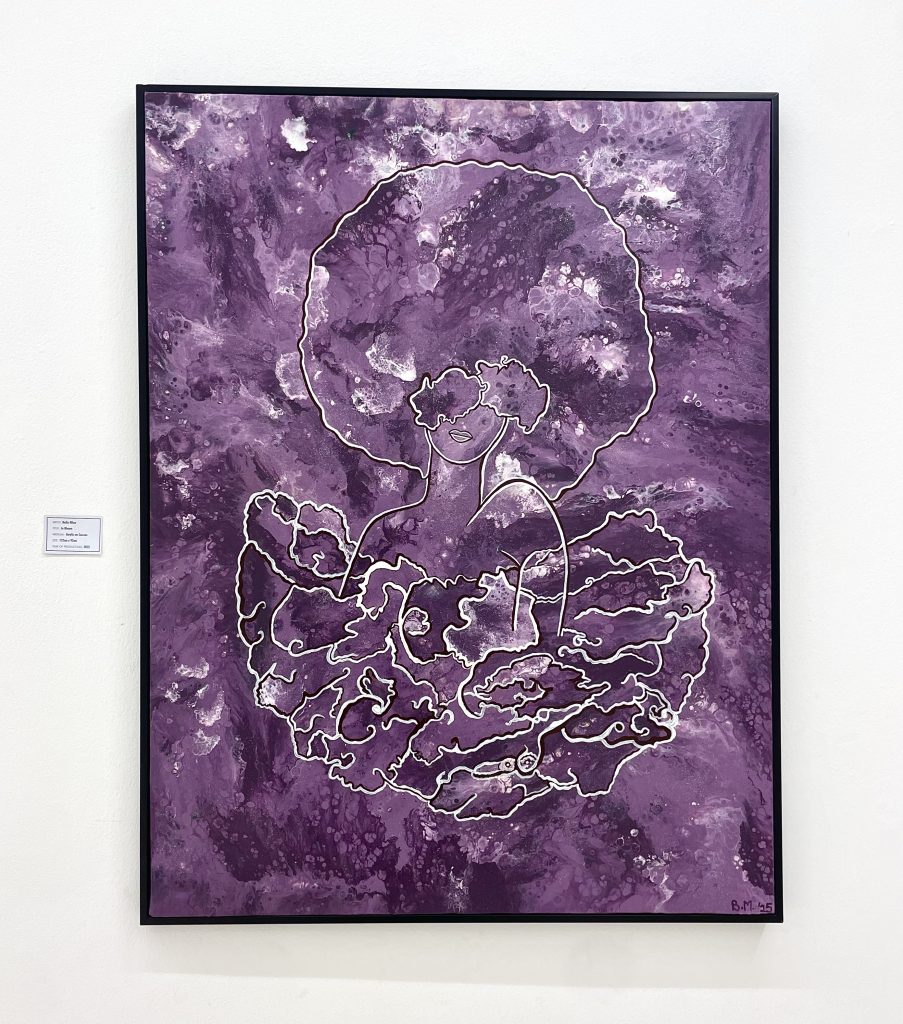
Mental health affects every aspect of our lives, yet many people still struggle to talk about it openly. Through my work, I hope to contribute to conversations that encourage empathy and compassion.
If someone feels seen or understood because of a piece I created, then the work has served a purpose beyond aesthetics.
AV1: Your pieces often give voice to emotions that remain unspoken. What are some of the emotions or experiences you find most challenging—and most rewarding—to express through art?
Bella: Grief, loneliness, and vulnerability can be difficult to express because they are deeply personal. These
emotions often carry layers of complexity that cannot be communicated through words alone.
Translating them into visual form requires honesty and a willingness to revisit uncomfortable experiences.
Yet they are also the most rewarding emotions to explore because they tend to resonate deeply with
others.
Some of the most meaningful conversations I have had with viewers happened when they recognized a part of their own story in my work. Those moments remind me of the shared humanexperiences that connect us all.
AV1: As someone who works extensively with acrylics and textures, how do materials and texture
contribute to the stories you tell on canvas?
Bella:Texture allows me to make emotions visible. The layers, movement, and imperfections add depth to the
work, reflecting the complexity of human experiences and the marks life leaves on us. I often think of
texture as a visual record of a journey rather than simply a design element.
Acrylics give me the flexibility to build those layers and create dynamic surfaces that invite closer
observation.
The tactile quality of my work encourages viewers to engage not only with the image itself
but also with the feeling behind it. Every layer contributes to the narrative, much like experiences shape
who we become over time.
AV1: Many people view vulnerability as a weakness, yet your work celebrates it as a source of
strength. What led you to embrace this perspective?
Bella: Through my own journey, I realised that vulnerability requires courage. Accepting our struggles, fears,
and imperfections is often the first step toward healing, growth, and authentic connection with others. It
takes strength to be honest about what we carry internally.
For a long time, I believed I had to appear strong at all times, but life taught me that true strength often
comes from openness.
Some of my most transformative experiences happened when I allowed myself to
be seen and understood. That realisation naturally became a central theme in my artistic practice.
AV1: The exhibition is titled “Here and Now.” What does that theme mean to you personally, and
how is it reflected in the works you will be showcasing?
Bella: To me, “Here and Now” is about presence and acceptance. It is an invitation to acknowledge where we
are in life without judgment.
In a world that constantly pushes us toward the next goal or achievement, I
think there is value in pausing to appreciate the present moment.
The works I am exhibiting reflect moments of reflection, resilience, and embracing the present despite
uncertainty.
They explore the emotional landscapes we navigate daily and encourage viewers to engage
with their current realities. For me, the theme is a reminder that there is beauty and meaning in simply
being present.
AV1: Your art encourages viewers to embark on an introspective journey. What questions do you
hope people ask themselves when standing before your work?
Bella: I hope they ask themselves, “What am I carrying?” What am I avoiding? What part of myself needs
compassion? Ultimately, I hope the work encourages honesty and self-reflection.
I also hope viewers consider how their experiences have shaped who they are today. Are there parts of
themselves they have neglected or hidden away?
If my work can create a moment of pause where someone reconnects with themselves, then I believe it has achieved something meaningful.
AV1: How have your personal experiences and environment in Abuja influenced the themes and
emotions present in your art?
Bella: My experiences have shaped much of the emotional depth in my work. Like many people, I have faced
moments of uncertainty, growth, and self-discovery, and these experiences often find their way onto the
canvas. Art has become my way of making sense of those experiences.
Living in Abuja has also exposed me to diverse stories, cultures, and perspectives that continually inspire
my exploration of resilience, identity, and human connection.
The city’s blend of calmness and complexity influences the energy within my work. I am constantly inspired by the people I meet and the stories that unfold around me.
AV1: In a world where many people struggle silently with life’s challenges, what role can art play in
healing, awareness, and connection?
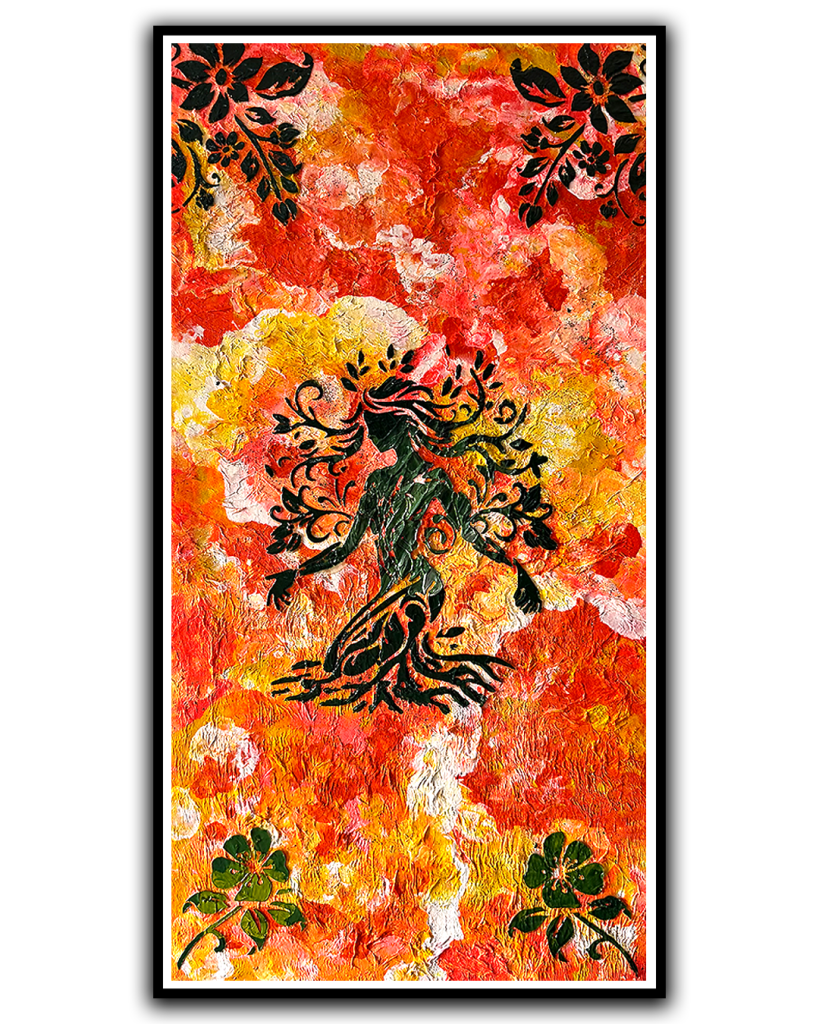
Bella: Art can create safe spaces for reflection and conversation. It can help people feel seen, understood, and
connected to others, even when words fail. In that way, art becomes both a mirror and a bridge.
It allows us to recognise our shared humanity despite our different experiences. Art can also bring
attention to issues that are often overlooked while offering hope and comfort to those who need it.
Sometimes, simply knowing that someone else has experienced similar emotions can be incredibly
healing.
AV1: What has been the biggest lesson you’ve learned from being a self-taught artist in Nigeria’s
growing contemporary art scene?
Bella:The biggest lesson has been to trust my voice. Being self-taught taught me that consistency, curiosity,
and authenticity are just as important as formal training when building a meaningful artistic practice.
There will always be pressure to compare yourself to others, especially in a rapidly growing art scene.
Over time, I learned that my uniqueness is one of my greatest strengths.
The experiences, emotions, and perspectives I bring to my work are things no one else can replicate. That realisation has given me confidence to create work that is true to who I am.
AV1: Is there a particular artwork in the exhibition that holds special meaning for you? What story
does it tell?
Bella: One of the works explores the journey from emotional isolation to self-acceptance. It is particularly
meaningful because it reflects a personal experience and serves as a reminder that healing is not always
linear, but it is always possible.
The layers within the piece symbolise different stages of growth, struggle,
and renewal.
What makes the work special to me is its honesty. It captures a moment in my life that challenged me but
also transformed me. Sharing it publicly feels like an act of vulnerability and a celebration of resilience at
the same time.
AV1: Looking ahead, what new ideas, themes, or creative experiments are you excited to explore
as you continue your artistic journey?
Bella: I am interested in exploring deeper conversations around identity, belonging, and emotional
transformation.
These themes continue to evolve as I grow personally and professionally, and I believe
there is still much more to uncover through them. I am particularly interested in how art can foster
dialogue and community.
I am also excited to experiment further with texture, scale, and immersive experiences that invite
audiences to engage with the work on a more personal level.
As an artist, I want to keep challenging
myself creatively while remaining connected to the emotional honesty that defines my practice. My goal
is to continue creating work that inspires reflection, healing, and meaningful connection.