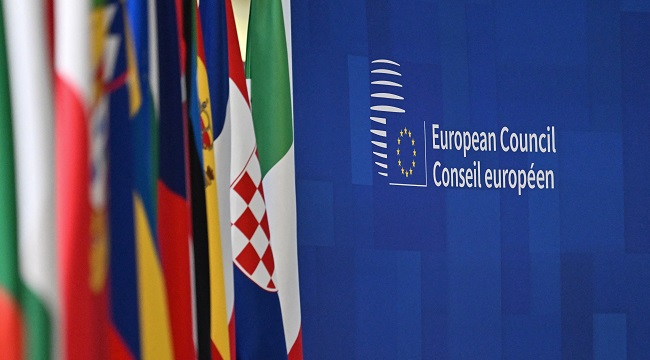
The European Union is set to issue fresh warnings to several member states over rising budget deficits as Brussels seeks to strengthen fiscal discipline across the bloc.
France and Italy, the EU’s second- and third-largest economies, have already received formal reprimands alongside eight other member states for breaching the union’s public spending rules.
The European Commission, the executive arm of the EU, is expected to publish its assessment of member states’ public finances on Wednesday and outline any corrective measures required.
Under EU fiscal rules, a country’s public deficit must not exceed three per cent of its gross domestic product (GDP). A public deficit occurs when government expenditure is greater than its revenue.
These fiscal limits were temporarily suspended during the COVID-19 pandemic to allow governments to support their economies. The rules were later relaxed again following the energy crisis triggered by Russia’s invasion of Ukraine in 2022.
The twin crises placed significant pressure on national budgets, leading many governments to increase spending to protect households and businesses.
A reformed framework of EU fiscal rules came into effect in 2024, restoring tighter oversight of public finances across member states.
Although the rules provide for financial penalties against countries that repeatedly violate deficit limits, the European Union has never imposed such fines.
Growing economic pressures continue to challenge policymakers across the bloc.
With energy prices rising again due to the ongoing conflict in the Middle East, Italy has called on the European Union to provide additional fiscal flexibility to help governments manage the economic impact.
Italian officials argue that greater budgetary room is necessary to support households, businesses and energy security initiatives.
Meanwhile, Bulgaria is expected to face criticism from the European Commission only months after joining the eurozone.
The Commission is preparing to formally warn the country for failing to comply with EU spending rules.
The development is not expected to surprise Bulgarian authorities.
Prime Minister Rumen Radev has already expressed concern about the deterioration of the country’s public finances and the widening budget deficit.
According to the European Commission’s latest economic forecast published last month, Bulgaria’s budget deficit is projected to reach 4.1 per cent of GDP this year.
The forecast also estimates a deficit of 3.5 per cent in 2025, both figures exceeding the EU’s three per cent threshold.
The expected warnings highlight the challenge facing European governments as they attempt to balance fiscal discipline with economic growth, energy security and social spending priorities.
Analysts say the Commission’s latest assessments could shape fiscal policy decisions across the region in the coming months, particularly as governments navigate slower growth and persistent inflationary pressures.
The EU’s renewed focus on budget discipline reflects broader efforts to maintain financial stability within the bloc while ensuring member states remain committed to agreed fiscal targets.