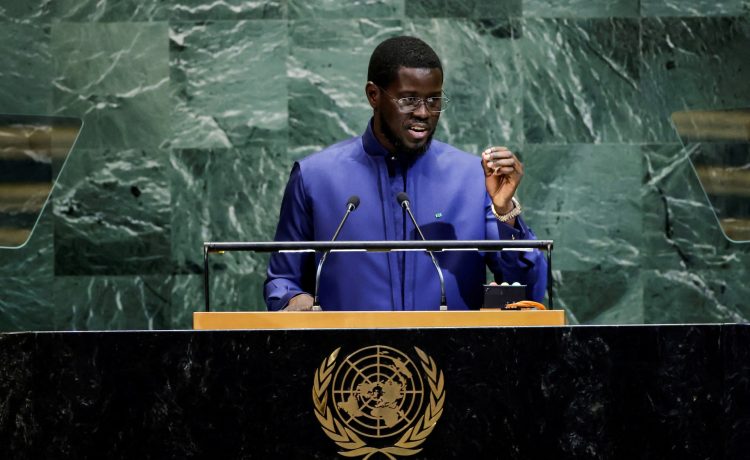
Bassirou Diomaye Faye has appointed seasoned economist Ahmadou Al Aminou Lo as Senegal’s new prime minister, days after dismissing the government led by former Prime Minister Ousmane Sonko.
Lo, who previously headed the Senegal branch of the Central Bank of West African States, was officially announced on state television on Monday.
During his first public remarks after the appointment, Lo sought to reassure both local businesses and foreign investors while acknowledging the country’s difficult financial situation.
“We must all be aware of the state of emergency our country currently finds itself in, particularly the state of public finances and its impact on the economy,” he said.
“Senegal is a safe and reliable country and intends to remain so,” he added.
The leadership change comes as Senegal faces mounting economic pressure following the suspension of a $1.8bn lending programme by the International Monetary Fund.
The IMF froze the programme after the discovery of misreported debt figures, which reportedly pushed Senegal’s debt burden to 132 per cent of its gross domestic product by the end of 2024.
The country’s total debt is estimated at about $13bn.
Sonko, who was removed from office on Friday, had publicly opposed any debt restructuring proposals reportedly advocated by the IMF.
While President Faye has remained relatively cautious in his public comments on the matter, tensions between both leaders had reportedly intensified in recent months.
In March, Sonko warned that he could lead the ruling Pastef party into opposition if the president deviated from the party’s political agenda.
The warning raised concerns over the government’s ability to secure parliamentary support for reforms needed to restore IMF backing.
Senegal’s National Assembly is expected to meet on Tuesday to discuss Sonko’s possible reintegration as a lawmaker.
Meanwhile, the recent resignation of the National Assembly speaker has fueled speculation that Sonko could eventually assume the leadership of the legislature.
Despite the political transition, Lo insisted that his appointment did not represent a departure from the reform agenda introduced under Faye’s administration.
According to him, the new government remains committed to the president’s vision of “systemic transformation” while adopting a fresh approach to governance and economic management.
Lo also praised the achievements of Sonko’s government, including an economic recovery programme announced last year that relied heavily on domestic financing strategies.
The appointment of the economist is widely viewed as an attempt by President Faye to stabilise investor confidence, manage relations with international lenders, and navigate growing political uncertainty within Senegal’s ruling coalition.