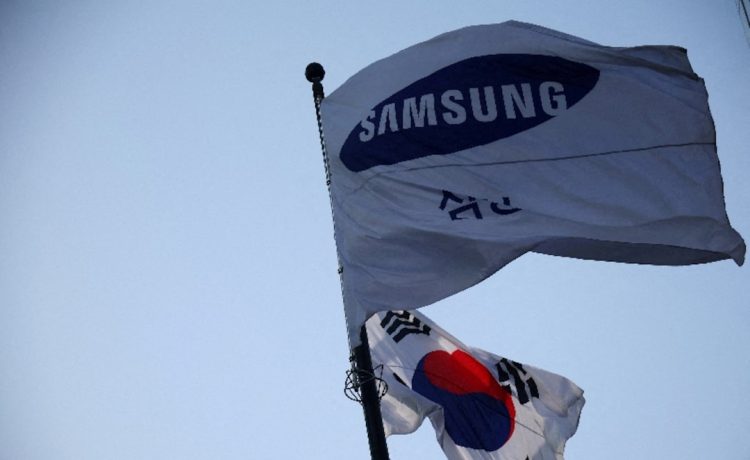
South Korea has said it will explore all possible measures, including emergency arbitration, to prevent a labour strike at Samsung Electronics, the country’s largest employer and a key driver of its export economy.
Prime Minister Kim Min-seok made the announcement on Sunday following an emergency meeting with ministers, as the government seeks to minimise potential economic damage from a dispute involving the company’s labour union.
Negotiations between Samsung Electronics and its South Korean labour union are set to resume on Monday, with government mediation expected to play a central role in efforts to reach a compromise and avoid a strike that could disrupt semiconductor production.
Kim warned that even a single day of halted production at Samsung’s semiconductor facilities could result in direct losses of up to 1 trillion won (about $667.68 million), while prolonged disruption could have far greater consequences.
“What is more concerning is that a temporary pause on semiconductor manufacturing lines leads to months of inactivity,” he said, adding that total economic damage could escalate to as much as 100 trillion won if materials become unusable due to prolonged stoppages.
The government is considering invoking emergency arbitration powers, which would temporarily prohibit industrial action for 30 days while the National Labor Relations Commission conducts mediation.
The measure is rarely used and would mark a significant intervention by a typically labour-friendly administration.
Under the proposal, the labour minister can trigger arbitration if a dispute is deemed likely to seriously harm the economy or disrupt daily life.
Samsung Electronics’ labour union has reportedly resisted pressure to accept arbitration, stating that it will not agree to a pay deal if the company’s offer is not satisfactory.
The company plays a critical role in South Korea’s economy, accounting for 22.8% of national exports and 26% of the domestic stock market, according to government figures.
It also employs more than 120,000 workers and works with around 1,700 suppliers, underscoring its central importance to the country’s industrial ecosystem.
Analysts warn that any prolonged strike at the semiconductor giant could ripple through global supply chains, particularly in the memory chip market, where Samsung is a dominant player.
The upcoming negotiations are therefore seen as crucial not only for South Korea’s economy but also for global technology markets dependent on semiconductor supply stability.