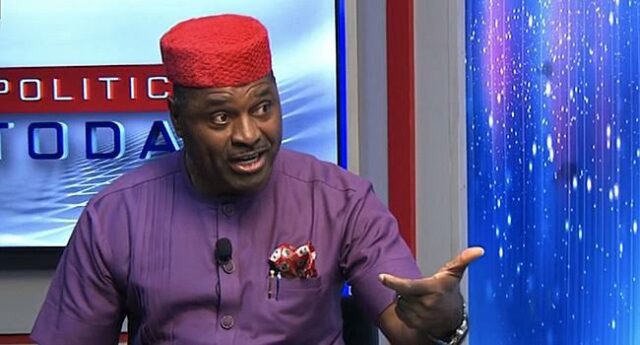
A chieftain of the African Democratic Congress (ADC), Kenneth Okonkwo, has said that former Labour Party presidential candidate, Peter Obi, may struggle to secure broad support in Nigeria’s South-East ahead of the 2027 elections.
Okonkwo, speaking during an interview on Channels Television, criticised the popular “Obi or nothing” slogan used by some supporters of Obi, describing it as culturally inappropriate and politically counterproductive within Igbo society.
He argued that the phrase contradicts what he described as the Igbo philosophy of collective progress, which he referred to as “Somadina,” suggesting that success should be shared rather than concentrated around a single individual.
According to him, the South-East has historically benefited more from political alliances and inclusiveness rather than exclusionary positions. He referenced past political arrangements involving late nationalist Nnamdi Azikiwe and former Vice President Alex Ekwueme, noting that collaboration across party lines had previously strengthened Igbo political representation.
Okonkwo further argued that alliances formed after past elections helped the region secure key leadership positions at the national level, including the vice presidency and speakership of the House of Representatives.
He also extended his criticism to recent political realignments involving Obi and former Kano State governor Rabiu Kwankwaso, alleging that their movement between political platforms reflects avoidance of internal party competition, particularly primary elections.
The ADC chieftain also claimed that both politicians were initially part of coalition discussions aimed at unseating President Bola Tinubu in 2027 before later leaving for the Nigeria Democratic Congress following internal disagreements.
He further described some supporters of Obi as “toxic,” though he acknowledged that he was once part of the same support base during the 2023 general elections, citing his desire for a South-East presidency as his motivation at the time.
Okonkwo said his position changed after the election, expressing disappointment over the outcome and subsequent legal and political processes that followed the contest.
The remarks come amid ongoing political repositioning among opposition figures as Nigeria moves closer to the 2027 general elections, with coalition talks and party defections reshaping alliances across regions.