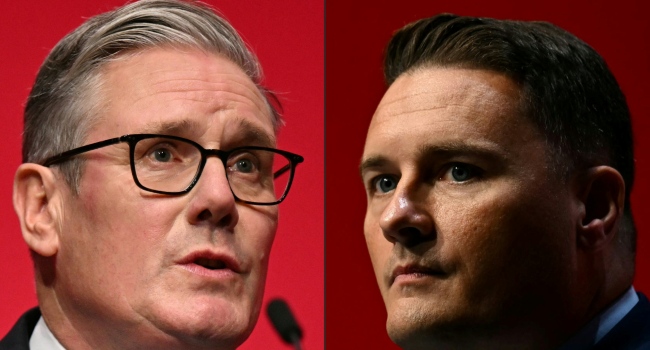
Wes Streeting has resigned as Britain’s health minister, intensifying political pressure on Keir Starmer and deepening divisions within the ruling Labour Party.
Streeting, who is regarded as a leading figure on the right wing of Labour, stopped short of officially declaring a leadership bid but called for the “best possible field of candidates” to contest any future race to replace Starmer.
The resignation comes amid growing unrest within Labour following disappointing local and regional election results last week, which have sparked renewed debate over Starmer’s leadership.
In a resignation letter published on X, Streeting said he had “lost confidence” in Starmer’s ability to lead the party into the next general election scheduled for 2029.
“It is now clear that you will not lead the Labour Party into the next general election,” Streeting wrote.
He also criticised Starmer for what he described as a lack of political vision, insisting that the debate over Labour’s future leadership should remain broad and competitive.
The crisis deepened after former deputy prime minister Angela Rayner announced that she had resolved legal and tax issues that could have prevented her from participating in a future leadership race.
Rayner, a prominent figure on Labour’s left wing, said the UK tax authorities had cleared her of deliberate wrongdoing in a tax-related matter involving property duty underpayment.
Although she stopped short of openly calling for Starmer’s resignation, Rayner urged him to “reflect” on his leadership following mounting voter dissatisfaction.
She told the Guardian that she would play “whatever role I can” to help “deliver the change”.
Starmer led Labour to victory in the 2024 general election, ending 14 years of Conservative Party rule. However, his leadership has come under increasing scrutiny after Labour suffered major setbacks in recent regional and local elections.
The elections saw significant gains for the hard-right Reform UK and the left-wing Green Party of England and Wales.
Labour also lost control of the Welsh parliament for the first time and failed to gain ground against the pro-independence Scottish National Party in Edinburgh.
The political turmoil has been compounded by criticism surrounding Starmer’s controversial decision to appoint and later dismiss former Jeffrey Epstein associate Peter Mandelson as the United Kingdom’s envoy to the United States.
So far, four junior ministers have resigned from government positions, while more than 80 Labour lawmakers have reportedly urged Starmer to either resign or announce a departure timetable.
Despite the pressure, Starmer has vowed to remain in office and fight any leadership challenge.
His spokesperson said on Thursday that the prime minister was “getting on with the job”.
Several senior cabinet members have publicly backed Starmer, including Finance Minister Rachel Reeves, who warned colleagues against destabilising the government through an internal leadership battle.
Reeves urged Labour lawmakers not to put the economy “at risk” by “plunging the country into chaos” with a leadership contest.
Attention has also turned to Andy Burnham, the Mayor of Greater Manchester and a popular figure among Labour’s soft-left faction.
Burnham is currently unable to contest the leadership because he does not hold a seat in the Westminster parliament, although discussions around a possible transition timetable could create an opportunity for his participation.
Under Labour Party rules, a challenger would require the backing of at least 81 Labour MPs — representing 20 percent of the party’s parliamentary membership — to formally trigger a leadership contest.
The growing unrest highlights deep ideological divisions within Labour’s 403-member parliamentary caucus and raises concerns that a prolonged leadership struggle could distract the government from its policy agenda and governance priorities.