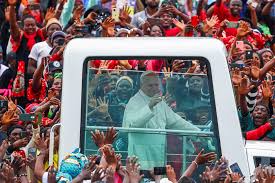
Thousands of worshippers gathered early Friday in Douala, Cameroon’s largest city and economic hub, as Pope Leo celebrated a major Mass expected to be the largest event of his ongoing four-nation Africa tour.
The Vatican estimated that about 600,000 people could fill the streets surrounding Japoma Stadium, where the pontiff was scheduled to lead the celebration and deliver a homily addressing global peace, inequality, and governance.
Amid tight security, many faithful began arriving at the stadium on Thursday night, remaining overnight to secure a place for the historic service.
Pope Leo, the first U.S.-born pontiff, has used the Africa tour to speak forcefully on global conflict and economic inequality, drawing international attention and criticism from political leaders, including U.S. President Donald Trump.
During a stop in Cameroon, the pope condemned what he described as excessive global military spending and warned that the world is “being ravaged by a handful of tyrants.”
He is also expected to visit a Catholic hospital in Douala during his brief four-hour stay before returning to Yaoundé, the capital.
The papal visit is part of a 10-day tour across Africa, during which he has criticized violations of international law and what he called “neocolonial” influences that undermine sovereignty and peace across developing nations.
Cameroon, a major oil and cocoa-producing country, continues to face significant security challenges, including a long-running Anglophone conflict that has claimed thousands of lives since 2017.
Despite the tensions, streets in Douala and Yaoundé were filled with enthusiastic crowds, with many residents wearing colorful fabrics featuring the pope’s image as they welcomed him along his route.
Local church leaders described the visit as a moment of hope and spiritual renewal. Bishop Léopold Bayemi Matjei said the country was in need of divine blessing and healing.
“Our country needs a powerful blessing so that hope will rise again,” he said.
The Vatican says the visit underscores its commitment to strengthening the Church’s presence in Africa, where Catholic communities continue to grow rapidly despite ongoing political and security challenges.