South Africa has formally returned ancestral human remains and a sacred national artefact to Zimbabwe in a landmark repatriation ceremony marking renewed global efforts to correct colonial-era injustices.
The handover took place on Tuesday at a museum in Cape Town, where eight coffins draped in the Zimbabwean flag were presented in a solemn ceremony attended by officials from both countries.
The remains, removed more than a century ago during colonial rule, were taken as so-called “scientific specimens” and include individuals believed to have been taken from graves without consent. One of the cases is thought to involve a tribal chief whose skull and jaw were collected in 1910, while another is believed to be a man killed under accusations of witchcraft.
South Africa’s Minister of Sports, Arts and Culture, Gayton McKenzie, said the repatriation reflects a moral responsibility to return what does not belong to the country.
He stressed that nations that expect the return of their own cultural artefacts must also act ethically by restoring those taken from others during colonial rule.
Zimbabwean officials described the event as deeply symbolic, linking it to cultural identity, dignity, and historical justice.
Reverend Paul Bayethe Damasane said the repatriation represents a restoration of identity and a renewed sense of shared history between the two nations.
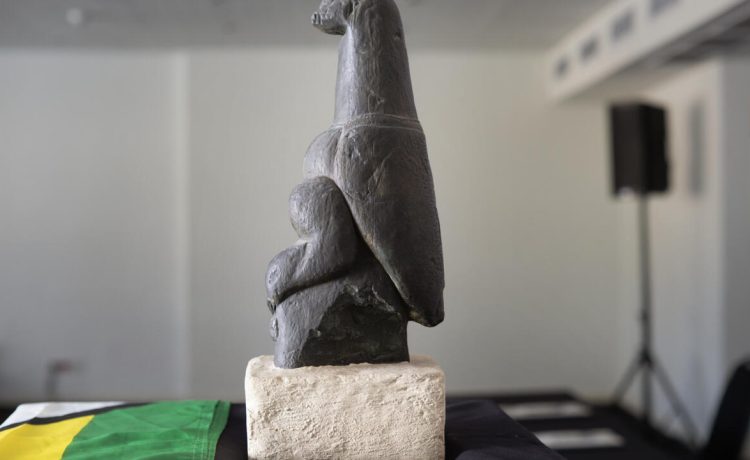
Alongside the human remains, South Africa also returned a centuries-old soapstone carving of the Zimbabwe Bird — a powerful national emblem originally taken from the ruins of Great Zimbabwe in the late 19th century.
The artefact was first removed by a British explorer and later sold to colonial figure Cecil John Rhodes. Its return comes nearly 140 years after it was taken.
The Zimbabwe Bird remains a central national symbol, appearing on the country’s flag and currency, with its origins tracing back to the 11th to 13th centuries during the era of the Great Zimbabwe civilisation.
Officials said the remains will be laid to rest in Zimbabwe with dignity, bringing closure to a painful historical chapter that has lasted more than a century.