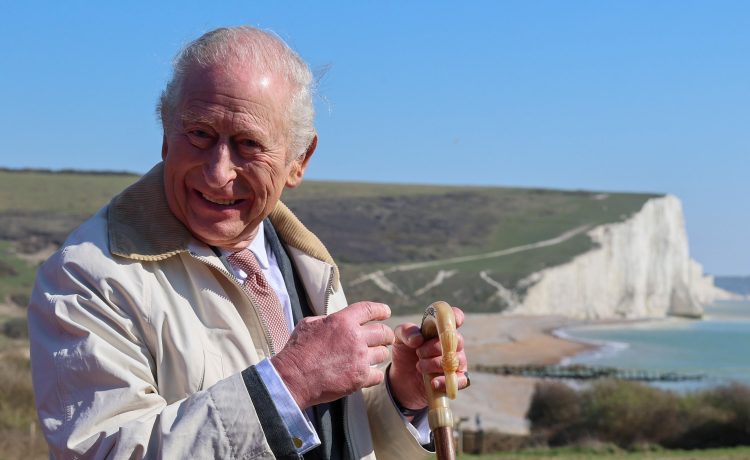
King Charles III has officially inaugurated the England Coast Path, including the iconic chalk downlands of the Seven Sisters in East Sussex, now part of a newly designated National Nature Reserve. The launch took place at a reception hosted by the South Downs National Park Authority, followed by a walk along a section of the completed path with Natural England Chair Tony Juniper and Environment Secretary Emma Reynolds.
Juniper described the path as “a testament to how public enjoyment, conservation, heritage, history and community can come together, helping make life better for millions of people.”
Although parts of the coastal route previously existed, over 1,000 miles of new paths have been created, and many sections have been upgraded. Resurfaced paths, removed stiles, boardwalks, and bridges have improved accessibility, including for people with reduced mobility.
Initiated during Gordon Brown’s government, the project has spanned 18 years and seven prime ministers. About 80% of the route is now open, with full completion expected by the end of the year.
Neil Constable, who led the project for Natural England, emphasized that the trail’s significance lies not in its length but in the freedom it offers: walkers can access the coast anywhere in England and follow the sea for as long as they like.
The path required new legislation under the Marine and Coastal Access Act, 2009, and extensive planning to create a continuous route. New rights of access have opened previously off-limits areas, including beaches, dunes, and cliff-tops, while gaps in the existing network have been filled.
In some locations, temporary obstacles remain. For instance, walkers must take a ferry across the Mersey in north-west England or wade across the River Erme in south Devon during low tide. Constable notes these challenges are “all part of the experience.”
Designed with climate change in mind, the law allows sections of the path to be “rolled back” inland if erosion or coastal shifts occur. This provision has already proven effective after a landslip in Dorset temporarily blocked a section of the path, allowing rapid diversion and reopening.
The Ramblers charity, which has campaigned for public coastal access since World War II, describes the path as “transformational,” providing access from the trail to the high water mark for picnics, exploration, and recreation.
The England Coast Path also links with the Wales Coast Path, completed in 2012, raising the possibility of a continuous 9,000-mile coastal walk around Britain. Scotland’s coastline, largely accessible under its “right to roam” law, would complete the route. At an average of 15 miles per day, the full journey could take nearly two years to complete.
Walkers can access maps and route details via the National Trails website to plan their journey along this historic and transformative trail.