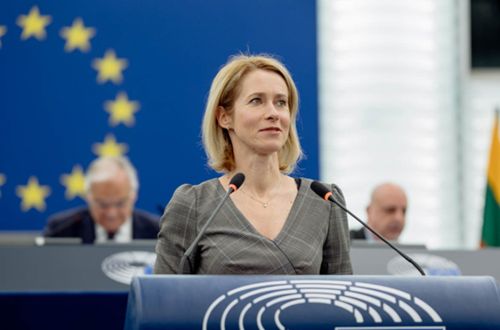
The European Union is set to sign a defence partnership with Ghana in the coming days, the bloc’s foreign policy chief, Kaja Kallas, announced on Monday in Brussels.
“There are many other interested countries knocking at our door,” Kallas said, highlighting that an increasing number of states are seeking to diversify their international security partnerships amid a volatile global environment.
Ghana has been playing a growing role in regional counter-terrorism efforts. The country is a member of the Accra Initiative — alongside Benin, Côte d’Ivoire, Togo, Burkina Faso, Mali, and Niger — which was launched in 2017 to prevent the spread of terrorism and violent extremism from the Sahel into the Gulf of Guinea coastal states. The initiative involves joint military operations, intelligence sharing, and security forces training.
At the same time, Ghana maintains dialogue with Mali, Niger, and Burkina Faso, members of the Alliance of Sahel States, formed in 2023 to strengthen military cooperation among countries facing growing armed group threats. According to the FOI Studies in African Security, Ghana has not experienced jihadist attacks so far, though nearby incidents, particularly in Burkina Faso, pose a significant threat.
Beyond security, Ghana maintains robust economic and political ties with Europe. Under the EU, Accra operates through an Economic Partnership Agreement to facilitate trade and reduce tariffs for Ghanaian goods in European markets. Germany regards Ghana as a priority partner for development cooperation, with trade reaching approximately €641 million ($745.5 million) in 2021. France also remains a key partner in military training, security cooperation, and peacekeeping capacity-building.
Accra hosts an International Peacekeeping Training Centre, supported by several European states, which trains military personnel and civilians in peace operations and crisis management, further cementing Ghana’s role as a regional security hub.