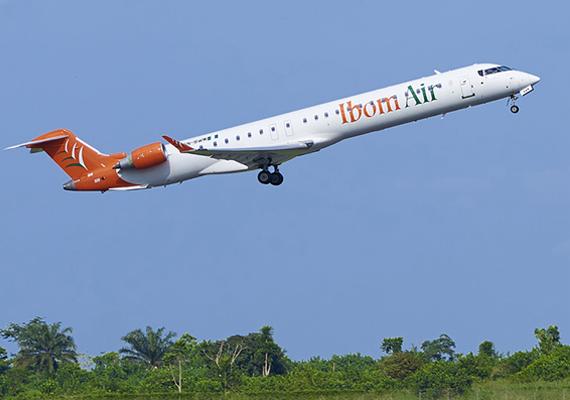
Ibom Air has announced a new restriction prohibiting passengers from placing power banks in overhead bins or checked-in baggage.
The decision follows a recent safety directive issued by the Nigeria Civil Aviation Authority (NCAA).
In a statement released on Tuesday, the airline said the directive introduces a critical adjustment to how power banks must be carried onboard commercial flights. The move, it noted, aligns with global aviation safety standards and reinforces its commitment to protecting passengers and crew from potential in-flight hazards linked to lithium-ion batteries.
“The NCAA directive, issued in line with global aviation safety standards, introduces a critical new restriction: passengers are prohibited from placing power banks in the overhead bins (hat racks),” the airline stated.
Under the new rule, passengers must keep their power banks within easy reach inside the cabin throughout the flight.
Ibom Air clarified that the longstanding prohibition on placing power banks in checked-in luggage remains unchanged. Lithium battery devices, including laptops and similar electronics, are not permitted in cargo holds.
“All power banks must now be carried in cabin luggage and stored either in the seat pocket in front of the passenger, under the seat, or in a carry-on bag kept within easy reach throughout the flight,” the statement added.
According to the NCAA directive, power banks with a capacity of up to 100 watt-hours (Wh) are allowed onboard without special approval. Devices rated between 100Wh and 160Wh require prior clearance from the airline before travel.
“Devices exceeding 160Wh are strictly prohibited on board aircraft,” the airline said. Passengers were advised to confirm the watt-hour rating printed on their devices before arriving at the airport.
The authority explained that the new measures are intended to ensure immediate response in the event of overheating or fire during flight.
“Power banks must not be placed in the overhead luggage bins during flight. They must be carried in the cabin and stored either under the seat in front, in the seat pocket, or in a carry-on bag that remains accessible to the passenger at all times,” the directive stated.
Ibom Air said the directive followed a series of global aviation incidents involving lithium-ion battery fires. These incidents have raised concerns about the risks posed by portable charging devices in confined aircraft environments.
The airline explained that lithium-ion batteries can enter a dangerous state known as thermal runaway if overheated or damaged. This condition can trigger intense fires that are difficult to extinguish mid-air.
“Lithium-ion batteries, when overheated or damaged, can ignite fires that are extremely difficult to control, particularly at 35,000 feet where emergency response options are limited,” the airline stated.
It further warned that storing such devices in overhead bins could delay detection in the event of smoke or combustion.
“Storing these devices in overhead bins delays detection and access, increasing the risk of catastrophic fire spread before cabin crew can intervene. These incidents reinforce the critical need for strict adherence to safety protocols governing lithium battery devices,” the statement added.