Nigeria’s contemporary art scene is rich, diverse, and continually evolving, shaped by a wide range of voices across generations, disciplines and regions. Within this expanding ecosystem, female artists play a significant and growing role, contributing to how stories of identity, memory, gender, healing, and social experience are expressed and understood.
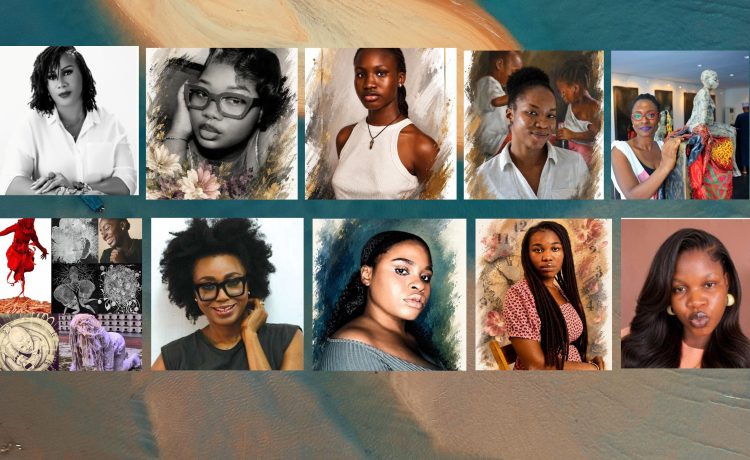
While they are by no means the only women working in this space, this feature highlights a selection of ten female artists whose practices reflect the depth, diversity, and creative direction of contemporary art in Nigeria today. Working across painting, sculpture, photography, installation, and mixed media, they represent just a fraction of a much larger community of women whose work continues to push boundaries and expand possibilities.
Together, their practices offer insight into a broader movement—one defined not by limitation, but by plurality, experimentation, and the ongoing redefinition of what contemporary Nigerian art can be.
Among these voices are seven artists who will be exhibiting at the upcoming Here & Now: Becoming, Identity, Memory, and Environment exhibition at Thought Pyramid Art Centre, Ikoyi, Lagos, from June 13 to June 30, 2026, in partnership with TAAG Gallery.
Their participation places them within a larger continental conversation about identity, transformation, and contemporary African experience. Below are 15 emerging female artists shaping this evolving landscape.
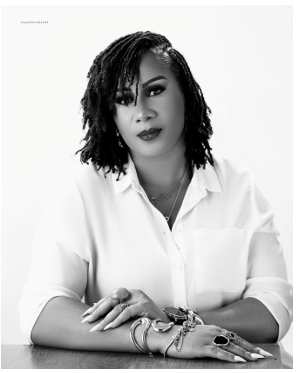
Bella Mfon is a self-taught contemporary artist whose practice is rooted in emotional expression and psychological exploration. Her work engages deeply with themes of mental health, internal conflict, and emotional release.
Using acrylic paint and heavily textured surfaces, she builds compositions that feel almost physical in their intensity. Inspired by abstract expressionist traditions, her paintings are less about representation and more about sensation—translating thoughts, silence, and emotional weight into visible form.
Her practice can be understood as both personal therapy and social commentary. Through layered gestures, chaotic textures, and rhythmic movement, Bella creates visual spaces where vulnerability is not hidden but embraced. At the upcoming Here & Now exhibition, her work extends this exploration of emotional survival and self-awareness in contemporary society.
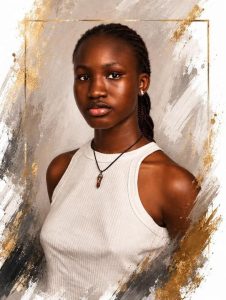
Similoluwa Ilori is a contemporary figurative painter whose work investigates the emotional architecture of identity. Working primarily in oil on canvas, she constructs intimate portraits that move beyond physical likeness into psychological depth.
Her paintings are defined by stillness and introspection. Faces are often quiet, almost suspended in thought, allowing viewers to encounter the emotional worlds beneath surface expression. She is particularly interested in how memory, silence, and vulnerability shape human identity.
Rather than presenting answers, Ilori’s work raises questions about what it means to be seen and understood. Her participation in Here & Now reflects her ongoing commitment to exploring the unseen emotional layers of human experience.

Temitope Victoria Ogunwale ’s practice is deeply rooted in emotional transparency and personal healing. Through figurative painting, she explores mental health, self-discovery, and the complexities of human connection.
Her work is instantly recognizable for its emotional symbolism. The color blue, long associated with her practice, represents vulnerability, memory, and emotional depth—often linked to her relationship with her mother. In contrast, her recent introduction of green signals transformation, renewal, and psychological growth.
Her figures often appear exposed, not in a literal sense alone, but emotionally unguarded. This openness allows her work to function as a space of reflection for both artist and viewer. At Here & Now, her paintings continue this journey toward emotional clarity and healing.
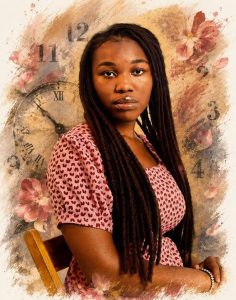
Esinulo Chiamaka Praise creates conceptual figurative works that explore the passage of time as an emotional and psychological force. Her practice is rooted in the idea that time is not linear, but layered, subjective, and deeply personal.
She uses symbolic motifs such as numbers, petals, and fragmented forms to construct visual meditations on memory, growth, and transformation. These elements serve as markers of lived experience, suggesting that identity is constantly evolving rather than fixed.
Her work often feels poetic, suspended between past and present. Through carefully composed imagery, she invites viewers to reflect on how time shapes relationships, emotions, and the sense of self. At Here & Now, her work extends this inquiry into becoming and impermanence.
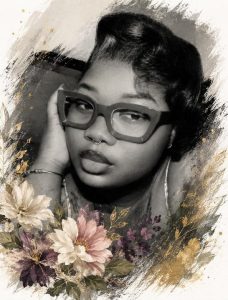
Tarikoro Tamunofiri Henrietta’s practice is centered on storytelling, memory, and emotional healing. Her figurative paintings explore personal and collective experiences of growth, vulnerability, and resilience.
A defining feature of her work is her use of nature—particularly botanical imagery—as metaphor. Flowers, leaves, and organic forms appear frequently, symbolizing cycles of healing, loss, and renewal. This connection to nature allows her to translate emotional experiences into universal visual language.
Her paintings often feel like emotional landscapes where identity is continuously shaped and reshaped. At Here & Now, she presents works that reflect on healing not as a destination, but as an ongoing process.
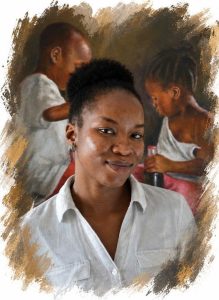
Ella Ojadi’s work focuses on childhood as a foundational space for identity formation. Through figurative painting, she reconstructs quiet, reflective moments that reveal the emotional complexity of growing up.
Her compositions are marked by restraint and sensitivity. Drawing from classical portrait traditions, she emphasizes atmosphere, light, and psychological presence rather than dramatic expression. The result is work that feels timeless yet deeply personal.
Ojadi is interested in how childhood memories continue to influence adulthood—often in subtle, unconscious ways. Her contribution to Here & Now reflects a broader inquiry into memory, innocence, and emotional development.

Nichodemus Chisom has developed a distinct visual language known as Contemporary African Sovereign Portraiture. Her work is a powerful celebration of Black identity, femininity, and cultural memory.
Her portraits are visually striking, often featuring deep skin tones, cowry shells, gold accents, and regal compositions. These elements function as symbolic references to African heritage, spirituality, and historical continuity.
Her subjects are presented with dignity and authority, challenging colonial visual histories that have often misrepresented African identity. At Here & Now, her work stands as a declaration of presence, beauty, and cultural sovereignty.
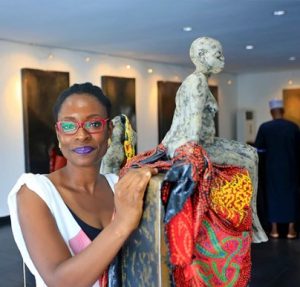
Peju Alatise is a multidisciplinary artist whose practice spans sculpture, installation, writing, and conceptual storytelling. Her work is widely recognized for its poetic yet uncompromising engagement with social realities, particularly those surrounding childhood, gender, freedom, and structural inequality in African societies.
Her sculptural installations often carry a sense of scale and theatrical presence, positioning the viewer within environments that feel both familiar and otherworldly.
Through this approach, she draws attention to the emotional and psychological dimensions of her subject matter, particularly the experiences of women and children navigating systems of limitation and resilience.

Ngozi Schommers is a Nigerian-German contemporary artist whose multidisciplinary practice explores the complexities of migration, identity, memory, and belonging.
Working across painting, installation, and mixed media, she creates layered visual narratives that reflect the emotional and psychological dimensions of displacement.
At the core of Schommers’ practice is the experience of living between cultures. Her work draws from her transnational background, allowing her to examine how identity is continuously shaped and reshaped by geography, history, and personal experience.
Rather than presenting identity as fixed, she approaches it as fluid, fragmented, and constantly evolving.
Her compositions often feature layered materials, symbolic references, and abstracted forms that evoke a sense of movement and transition. These visual strategies mirror the internal experience of migration—not only as physical relocation but also as an emotional and psychological journey.
Odun Orimolade
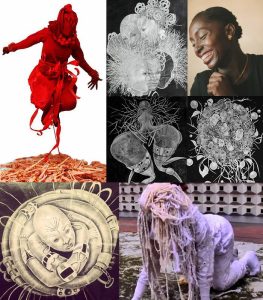
Odun Orimolade is a contemporary Nigerian multidisciplinary artist whose practice engages with themes of identity, memory, and African femininity through photography, installation, and mixed media. Her work explores the intersection between personal experience and collective history, positioning the body as a central site of memory and cultural expression.
At the core of Orimolade’s practice is an interest in how identity is formed, preserved, and transformed over time. She examines how lived experiences—particularly those related to gender, culture, and environment—are inscribed onto the body, shaping both self-perception and social understanding.
Her visual language is often intimate and reflective, using carefully composed imagery and layered conceptual approaches to explore emotional depth. Through her work, the body becomes more than a physical form; it becomes an archive of memory, emotion, and lived experience.
Transforming Nigeria’s Art Ecosystem
The growing visibility of contemporary female artists in Nigeria reflects a broader transformation within the country’s art ecosystem—one defined by diversity, experimentation, and expanding creative voices. These artists are not working in isolation, but within a dynamic and evolving cultural landscape where new ideas about identity, memory, gender, spirituality, and social experience are constantly being explored and redefined.
Through painting, sculpture, photography, installation, and mixed media, they continue to push the boundaries of form and narrative, offering deeply personal yet widely resonant interpretations of contemporary life.