U.S. President Donald Trump on Monday demanded that Iran pay compensation for deaths and damage linked to conflicts, attacks and protests, escalating rhetoric that could further complicate efforts to reach a deal to reopen the Strait of Hormuz.
Trump’s demand came in response to conditions set by Tehran for a peace agreement, including compensation and an end to U.S. sanctions and military threats.
The Iranian demands were broadly in line with the terms of a preliminary peace agreement signed in June, which has since broken down.
Since the war began in February, Trump has repeatedly shifted between threats of further escalation and claims that a peace agreement was close.
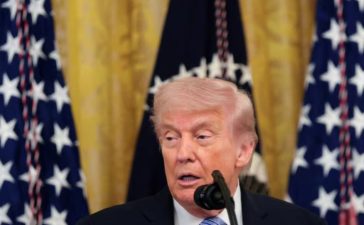
“We’re going to ask for money for the damage they’ve done over a 50-year period,” Trump said at the White House, adding that compensation should cover deaths among civilians and U.S. forces in the region.
“So if there’s damages to be paid, I think Iran should pay those damages,” he said.
Trump later expanded his demands in a post on Truth Social, saying Iran should be responsible for damages and deaths involving people in Lebanon, Syria, Yemen and Gaza.
The demands pushed oil prices higher on Monday, with crude settling about 5 per cent higher as investors assessed the reduced prospects of an agreement to reopen the Strait of Hormuz.
Trump also referred to Iran’s crackdown on demonstrations in late 2025 and 2026, claiming that about 52,000 protesters had been killed as of six weeks earlier.
However, the figure is disputed. While some Iranian opposition and exile groups have claimed that tens of thousands were killed, the U.S.-based Human Rights Activists News Agency reported about 7,000 deaths in February, including approximately 6,500 protesters.
Trump also said Iran should compensate families of the 17 U.S. sailors killed in the October 2000 attack on the USS Cole in Yemen.
The attack has been attributed to al Qaeda, rather than Iran.
The latest exchange comes as Iran and Oman continue discussions over the reopening of the strategically important Strait of Hormuz.
Iran earlier said it was nearing a final agreement with Oman on new shipping lanes through the waterway but maintained that the United States must meet conditions including compensation, an end to sanctions and an end to military threats before the strait can be reopened.
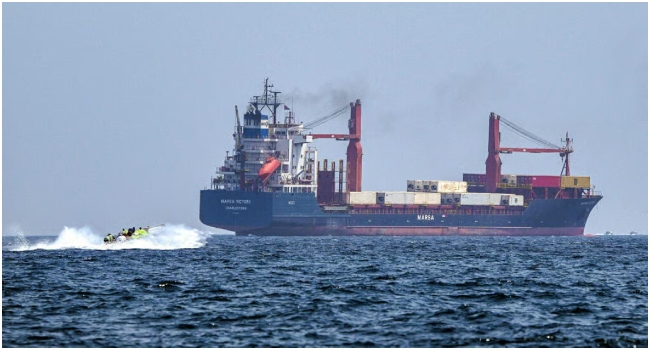
The Strait of Hormuz is one of the world’s most important energy corridors, with about one-fifth of global oil and liquefied natural gas supplies passing through it before the conflict.
The waterway has been effectively blocked since the war began, contributing to higher oil prices and inflation.
Iranian Foreign Ministry spokesman Esmaeil Baghaei said on Monday that discussions with Oman were “progressing smoothly and constructively”.
He said the two sides had reached an agreement on a map for a shipping route, although some technical issues remained unresolved.
The talks also covered services that would normally involve payments, including safe navigation, environmental protection, maritime services and efforts to combat crime.
However, U.S. officials have repeatedly ruled out any agreement that would allow Tehran to charge fees for access to the strait.
The latest diplomatic tensions come after months of U.S. military efforts to weaken Iran’s control over the waterway.
Those efforts included a two-week campaign of strikes in July, but Iran has maintained significant influence over shipping through the strait.
Trump nevertheless repeated on Monday that the waterway was open and claimed that the United States Navy was the only party currently controlling the Strait of Hormuz.
Washington and Tehran agreed to a ceasefire in June, but the United States reimposed a blockade on Iranian shipping in July.
Tehran said the move violated the ceasefire agreement.
Iran has responded with missile and drone attacks against U.S. allies in the region while also targeting commercial ships attempting to transit the Strait of Hormuz without its permission.
The dispute is also creating growing political pressure on Trump as the November midterm elections approach.
The war has become unpopular among some U.S. voters, while high fuel prices have emerged as a major concern, particularly in rural areas that have traditionally supported Trump.
Democratic U.S. Representative Bill Keating said the developments showed that the pressure to end the conflict was beginning to influence Washington.
“What you’re seeing here is the beginning of a capitulation,” Keating said on CNN.
For now, the competing demands from Washington and Tehran leave the reopening of the Strait of Hormuz uncertain.
Any prolonged disruption to the waterway could continue to support higher oil prices and add to inflationary pressures globally, while a successful agreement could ease concerns in energy markets and reduce pressure on fuel prices.