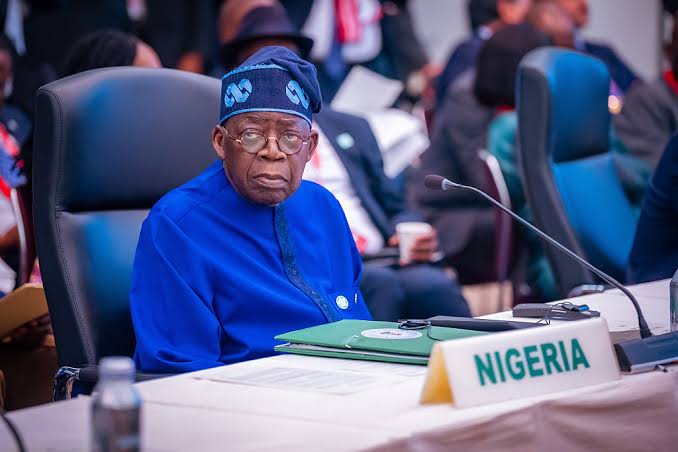
President Bola Tinubu on Tuesday said Nigeria is ready to collaborate with African nations, global partners and the private sector to deliver cleaner, affordable, inclusive and more secure energy.
Tinubu said energy remains the invisible force holding the modern world together, serving as the architecture of balance among nations and the stabilising factor for economies and societies.
The President stated this while declaring open the 9th Nigeria International Energy Summit at the State House Banquet Hall, Abuja. He was represented at the event by Vice President Kashim Shettima.
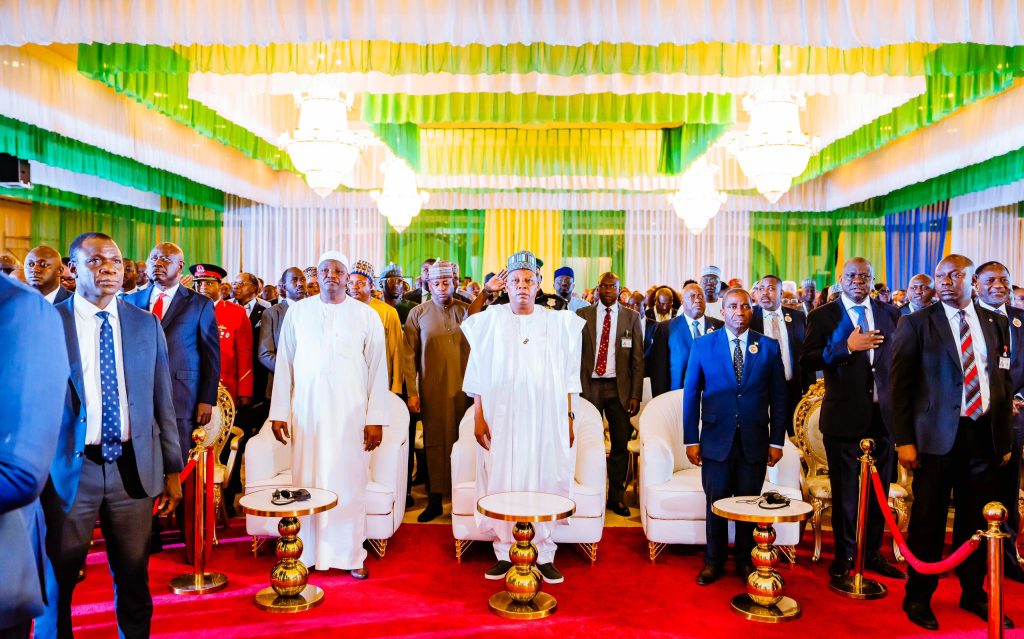
The summit attracted heads of delegation and senior government officials from across the world, leaders of international energy organisations, chief executives of global and indigenous energy companies, development finance institutions and representatives of host communities.
While noting that energy remains central to peace, prosperity and global stability, Tinubu said Nigeria is prioritising the utilisation of its vast gas reserves as a transition fuel, alongside the expansion of renewable energy capacity.
“Energy must unite communities, stabilise economies and secure futures. It must power factories, illuminate homes, fuel innovation and build trust between government, investors and citizens. Nigeria stands ready to collaborate with Africa, global partners and the private sector to deliver energy that is secure, affordable, cleaner and inclusive,” he said.
The President recalled that his administration inherited an energy sector in 2023 that was rich in potential but constrained by inefficiencies, uncertainty and prolonged underinvestment.
“We set to work without fanfare, guided by the clear understanding that energy cannot be treated simply as an economic commodity if stability is our goal. Energy is a catalyst for national security, industrial growth, social inclusion and regional cooperation,” he noted.
Tinubu assured that his government remains committed to building an energy system anchored on reliability, transparency, sustainability and shared prosperity.
Highlighting reforms under his administration, he said the full implementation of the Petroleum Industry Act had been sustained and deepened, strengthening regulatory institutions and improving investor confidence through clearer roles and enhanced transparency.
“Under our watch, Nigeria’s upstream activity recorded a historic rebound. Rig counts rose from eight rigs in 2021 to 69 rigs by late 2025, reflecting renewed exploration and drilling momentum,” he said.
According to the President, the sector also secured Final Investment Decisions exceeding $8bn, including major offshore gas projects involving global energy companies, while foreign direct investment into the oil and gas subsector rebounded strongly.
He added that crude oil theft, which had long constrained production and revenue, declined significantly due to improved security coordination, surveillance and regulatory enforcement, restoring operational stability and boosting Nigeria’s credibility in global energy markets.
Earlier, Gambian President Adama Barrow said Nigeria’s energy policies have implications beyond its borders, stressing that regional cooperation and strategic partnerships are essential for energy security.
President of Equatorial Guinea, Teodoro Obiang Nguema Mbasogo, said Africa must move beyond exporting raw materials and focus on processing resources locally for the benefit of future generations.
In a speech read on his behalf, Senate President Godswill Akpabio said energy in Africa is not just about resources but about inclusive and sustainable prosperity, assuring that the National Assembly is ready to provide legislative backing to support sector reforms.