Donald Trump has escalated tensions in the ongoing Middle East conflict, warning that the United States could destroy Iran’s civilian infrastructure within hours if Tehran fails to reopen the Strait of Hormuz to international shipping.
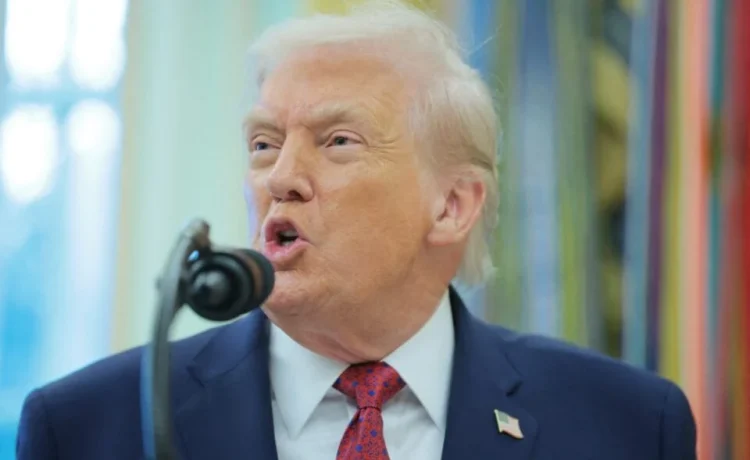
Speaking during a press conference in Washington on Monday, Trump said the US military had the capability to demolish key bridges and power plants across Iran in a rapid and devastating strike.
“We have a plan — because of the power of our military — where every bridge in Iran will be decimated by 12 o’clock tomorrow night, where every power plant in Iran will be out of business, burning, exploding and never to be used again,” Trump said.
“I mean complete demolition by 12 o’clock, and it’ll happen over a period of four hours — if we wanted to.”
The warning came five weeks into the war triggered by joint US-Israeli air strikes on Tehran. The conflict has expanded across the Middle East and disrupted global energy markets.
Trump has demanded that Iran reopen the strategic Strait of Hormuz to international shipping by midnight GMT on Tuesday or face another round of bombing.
The waterway is one of the world’s most critical energy corridors, with a large share of global oil and gas shipments passing through it.
Despite rising tensions, international mediators are still pushing for a ceasefire agreement. A proposal for a 45-day truce has been discussed by negotiators from Pakistan, Egypt and Turkey, but both Washington and Tehran have indicated the plan is not yet acceptable.
Trump acknowledged the proposal was a “significant” step but said it was insufficient in its current form.
Iranian officials have also rejected the draft proposal, insisting that any agreement must ensure a definitive end to the conflict.
Iran’s military said it would continue operations as long as political leaders deemed necessary.
The US president’s latest remarks have triggered concern among international humanitarian organisations.
Mirjana Spoljaric warned that deliberate threats against civilian infrastructure violate international humanitarian law.
“Deliberate threats… against essential civilian infrastructure are illegal,” she said.
Meanwhile, military operations have continued across Iran and the broader region.
Israeli forces reported striking several Iranian targets, including major petrochemical facilities in Asaluyeh on the Gulf coast and another near the city of Shiraz.
The Israeli military also said it targeted Iranian air force assets, including aircraft and helicopters stationed at airports in Tehran and other locations.
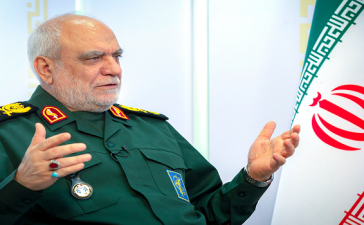
Iran confirmed that Majid Khademi, intelligence chief of the Revolutionary Guards, was killed in the strikes.
Israel’s military also said it had killed Asghar Bagheri, commander of the elite Quds Force special operations unit.
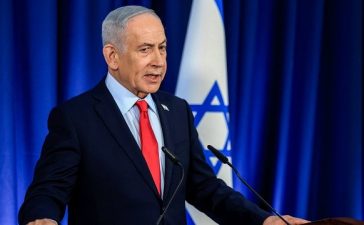
“We will reach anyone who seeks to harm us,” Israeli Prime Minister Benjamin Netanyahu said.
Iran’s Revolutionary Guards vowed a major retaliatory strike in response to the killings of their commanders.
The conflict has also drawn in regional actors. Yemen’s Houthi rebels announced that they had launched attacks targeting Israel in support of Iran and its ally Hezbollah.
The war, which erupted on February 28 following US-Israeli strikes that killed Iran’s Supreme Leader Ali Khamenei, has shaken global energy markets and disrupted supply chains.
Iran’s blockade of the Strait of Hormuz has pushed oil and gas prices higher and forced countries to seek alternative supply routes.
Indonesia announced plans to increase jet fuel surcharges, while low-cost airline AirAsia X said ticket prices could rise by as much as 40 per cent due to higher fuel costs.
Meanwhile, South Korea said it would redirect oil shipments through Saudi Arabia’s Red Sea port of Yanbu to avoid the Hormuz route.
Taiwan has also indicated plans to use the Red Sea corridor for energy imports.
Several Gulf nations allied with Washington have reported being affected by the conflict. Both Kuwait and the United Arab Emirates reported strikes and injuries over the past two days.
Iran has continued launching missile attacks toward Israel. In the northern Israeli city of Haifa, authorities said four bodies were recovered from a residential building struck by a missile.
Iranian state media also reported attacks on residential areas in Tehran and gas outages in parts of the capital following a strike on a university facility.
As the war intensifies, global leaders are increasingly concerned that the conflict could widen further and trigger deeper economic shocks across international markets.