US President Donald Trump insisted on Wednesday that the United States is nearing victory in the ongoing conflict with Iran, more than a month after a war that has shaken global energy markets and sent his domestic approval rating plunging.
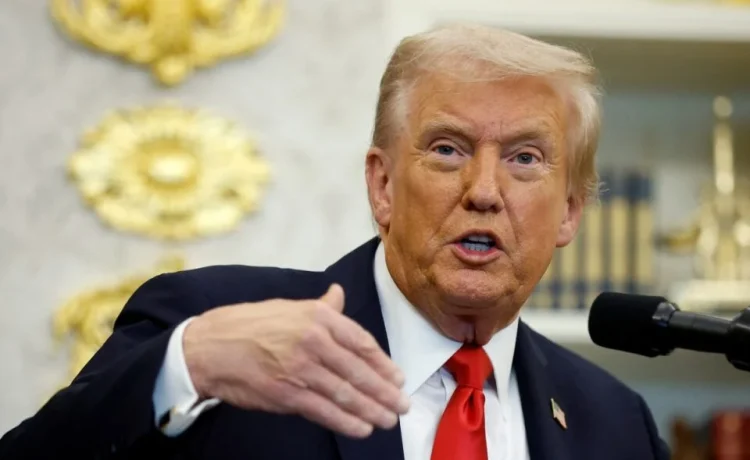
Speaking from the White House, Trump offered a 19-minute address largely echoing his recent social media posts and media appearances, pledging two to three more weeks of “extremely hard” strikes against Iran.
“We are going to finish the job, and we’re going to finish it very fast. We’re getting very close,” Trump said, reiterating US objectives to crush Iran’s military, end its support for regional armed groups, and prevent Tehran from obtaining a nuclear bomb — a threat experts and the UN nuclear watchdog say is not immediate.
Trump framed the war as largely successful, citing Israel’s strike that killed Iran’s longtime supreme leader, Ayatollah Ali Khamenei, and claiming that “most” of Iran’s leadership has been eliminated.
However, Iran has responded by asserting control over the Strait of Hormuz, a critical passage for one-fifth of global oil shipments. The disruption has contributed to soaring US gasoline prices, which recently climbed above $4 per gallon, and weakening consumer confidence, compounding pressure on Trump’s already fragile economic standing.
The President escalated threats against Iran, vowing that if no negotiated settlement is reached, the US would target “each and every one of their electric generating plants,” a move widely seen as potentially illegal under international law.
“Over the next two to three weeks, we are going to bring them back to the Stone Ages, where they belong,” Trump said, underscoring a hardline approach with minimal reference to diplomacy.
Earlier claims by Trump that Iranian President Masoud Pezeshkian was seeking a ceasefire were swiftly denied by Iran’s foreign ministry, which described Washington’s demands as “maximalist and irrational.”
Trump also addressed regional and global allies, offering assurances to Gulf Arab states while criticizing European partners for hesitating to support the conflict, noting their reliance on oil flowing through the Hormuz Strait.
“Countries that receive oil through the Hormuz Strait must take care of that passage,” he said, urging them to “build up some delayed courage.”
Despite Trump’s confident rhetoric, analysts say the war’s escalation has heightened regional instability, caused economic strain worldwide, and deepened uncertainty about the US strategy and the potential for broader conflict.