Leading economic institutes have sharply downgraded their growth outlook for Germany, warning that the energy shock triggered by the Middle East war will weigh heavily on Europe’s largest economy.
A group of prominent research institutes cut their joint growth forecast for 2026 to 0.6 per cent, down from their earlier 1.3 per cent projection released in September.
At the same time, inflation is now expected to rise to 2.8 per cent, compared with the earlier forecast of 2.0 per cent, a development economists say will weaken household purchasing power.
“The energy price shock triggered by the Iran war is hitting the recovery hard,” said Timo Wollmershaeuser, an economist at the Ifo Institute.
He added that increased government spending was helping cushion the economic impact but warned that the overall recovery remains fragile.
Global oil and natural gas prices have surged since late February when the United States and Israel launched attacks on Iran, killing the country’s supreme leader and triggering a wider regional conflict.
In response, Iran closed the strategic Strait of Hormuz to vessels from countries it considers allied with Washington and Tel Aviv.
The strait normally carries about 20 per cent of global oil and gas shipments, making the disruption a major shock to global energy markets.
Economists say the resulting spike in energy prices is likely to push inflation higher in Germany, reducing consumer spending and further weakening an economy that has already struggled with sluggish growth.
Germany’s economy has barely expanded since the surge in consumer demand that followed the end of the COVID-19 pandemic restrictions in 2022.
The country has also faced growing competition from China in key industries such as automobiles and chemicals, sectors that have long powered its export-driven economy.
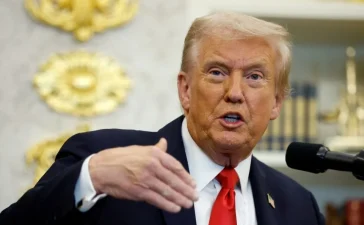
Economic pressures were compounded after Donald Trump introduced sweeping tariffs last year before the escalation of the Middle East conflict.
Germany’s Chancellor, Friedrich Merz, who took office in May, has pledged to revive the economy through a massive infrastructure spending programme.
The government plans to borrow and invest hundreds of billions of euros through a special infrastructure fund, a move widely described as a fiscal “bazooka” to stimulate economic growth.
However, economists argue that a large share of the spending is currently being used for regular government consumption rather than long-term investment.
“Government expenditure on consumption is rising much more sharply than investment,” said Oliver Holtemoeller of the Halle Institute for Economic Research.
“That was not the idea behind changing the financing rules,” he added.
The institutes also warned that Germany faces serious long-term structural challenges, including low productivity, industrial decline and a rapidly ageing population.
According to Wollmershaeuser, demographic pressures could significantly slow the country’s economic potential in the coming years.
“In an era when demographic change is hitting with full force, potential growth will come to a standstill by the end of the decade,” he said.
He added that Germany may have to adjust to average GDP growth rates close to zero in the future.
To address the situation, the institutes recommended that the German government introduce policies to increase incentives for employment and reduce regulatory barriers that hinder investment and innovation.