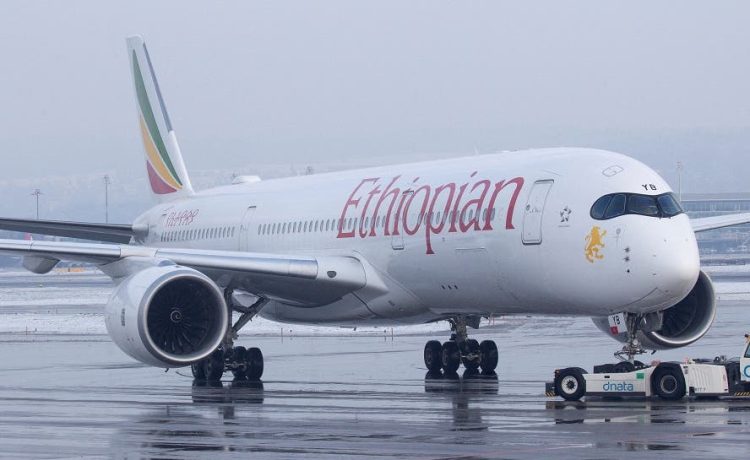
Africa’s largest airline, Ethiopian Airlines Group, has commenced the construction of the $12.5 billion Bishoftu International Airport, a landmark project expected to significantly transform air transport across the continent.
Construction officially began on January 10, 2026, following a groundbreaking ceremony that marked the start of what is being described as one of Africa’s most ambitious aviation infrastructure projects.
Phase One of the development is scheduled for completion by 2030 and is projected to handle up to 60 million passengers annually. Upon full completion, the airport will have the capacity to serve 110 million passengers each year, positioning it among the world’s largest aviation hubs and strengthening Africa’s global air connectivity.
Speaking at the event, Ethiopian Airlines Group Chief Executive Officer, Mr Mesfin Tasew, described the project as a defining moment for both the airline and the continent.
“This is truly a proud moment for Ethiopian Airlines and for all of Africa. We are embarking on a new chapter with the groundbreaking of Bishoftu International Airport that will redefine the continent’s aviation ecosystem,” Tasew said.
He noted that the project coincides with Ethiopian Airlines’ 80th anniversary, adding that the new airport underscores the carrier’s long-term commitment to shaping the future of African aviation and meeting growing passenger and cargo demand.
According to Tasew, Bishoftu International Airport will help bridge Africa’s infrastructure gap and play a strategic role in advancing the African Continental Free Trade Area (AfCFTA) by facilitating trade, investment, and regional integration.
“We are committed to realizing the completion of this project,” he added.
Also speaking, Ethiopia’s Prime Minister, Dr Abiy Ahmed, described the commencement of construction as a major milestone in the country’s journey towards modernization and economic prosperity.
He said Ethiopian Airlines remains a source of national pride, not because it has been without challenges, but due to its resilience, ability to overcome obstacles, and its role as a trailblazer for Africa’s aviation industry.
The Prime Minister highlighted the airline’s strong corporate culture as its greatest asset, pointing to its emphasis on safety and security, leadership driven by creativity and hard work, and a workforce of more than 26,000 employees who are deeply committed to the airline’s mission as the national flag carrier.
He also praised Ethiopian Airlines’ continuous investment in learning, capacity building, and innovation, noting that these qualities have positioned it as a leading force in Africa’s air transport sector.