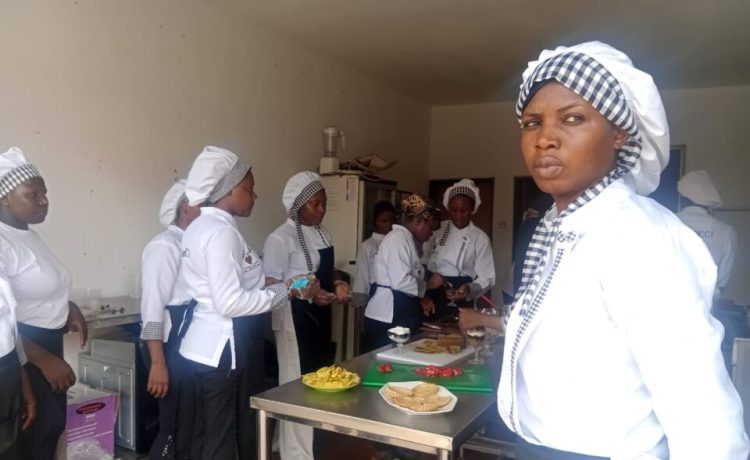
The Federal Government has trained and empowered 100 young Nigerians in culinary and hospitality skills under the Innovation, Development and Effectiveness in the Acquisition of Skills (IDEAS) initiative, part of ongoing efforts to tackle unemployment and bridge critical skills gaps.
The six-month programme was implemented by the Masterminds Catering and Culinary Institute Academy in partnership with the Federal Ministry of Education and the World Bank. It combined intensive classroom learning with practical industry experience.
Speaking at the closing ceremony in Abuja on Wednesday, the Chief Executive Officer of the institute, Khadijat Fashina, said the academy was created to address the shortage of skilled professionals in the hospitality and catering sector.
“I discovered there was a major skills gap in the industry, and that was affecting many entrepreneurs. That is why we decided to focus on bridging that gap,” she said.
Fashina explained that the programme’s structure was designed to give participants both theoretical knowledge and hands-on exposure to real-world industry practices.
“At the end of the programme, they are better positioned to either start their own businesses or become more employable,” she added.
She noted that participants were trained under the National Skills Qualification Framework to ensure standardised and competency-based certification.
Also speaking at the event, the Special Assistant to the President on Arts, Culture, Tourism and Creative Economy, Ayomide Adeagbo, said the initiative reflects a growing shift toward skills-driven employment in a rapidly changing global economy.
“The world is moving beyond traditional nine-to-five jobs. Skills and talent now matter a lot, and that is why the government is investing in programmes like this to empower young people,” he said.
Adeagbo added that the programme is part of wider efforts to equip Nigerians with practical skills across various sectors. He said support mechanisms have also been designed to assist beneficiaries after completing the training.
“We are not just training people and leaving them. There are follow-up plans, including access to funding through initiatives like the Creative Economy Development Fund, which will help beneficiaries start and grow their businesses,” he stated.
He further emphasised the importance of supportive policies and funding in strengthening the creative and skills economy.
“Policy and funding are the foundation for growth. We have created both to ensure that young Nigerians can thrive in the creative and skills economy,” he added.
In her remarks, the National Project Coordinator of the IDEAS-TVET initiative at the Federal Ministry of Education, Mrs Blessing Ogwu, congratulated the trainees for their dedication and urged them to maximise the opportunity provided.
“We want you to count yourselves fortunate. Not everyone has access to this kind of opportunity. When we were younger, many of us did not have this platform,” she said.
She also encouraged the graduates to consider entrepreneurship and innovation rather than relying solely on traditional employment.
One of the beneficiaries, Patience Anaja, described the training as life-changing, saying it allowed her to turn a long-standing passion into a viable career path.
“I’ve always loved being in the kitchen. When I saw this opportunity, I knew it was a chance to do what I truly enjoy,” she said.
Anaja noted that the programme strengthened both her practical cooking skills and entrepreneurial capacity, while calling for similar initiatives to be expanded so that more young Nigerians can benefit.
Nigeria continues to face high youth unemployment and a growing mismatch between the skills possessed by job seekers and the needs of industry. In response, policymakers have increasingly promoted technical and vocational education and training as a practical solution.
Sectors such as hospitality, tourism and creative services are widely seen as areas with strong potential for job creation, particularly as Nigeria’s urban population expands and the service economy continues to evolve.