An Israeli strike has killed the intelligence chief of Iran’s Revolutionary Guards, intensifying tensions as Tehran defied threats from Donald Trump to destroy Iranian civilian infrastructure if the country fails to reopen the strategic Strait of Hormuz.
The killing marks another escalation in the ongoing conflict between Israel and Iran, with both sides continuing to exchange missile and drone strikes across the region.
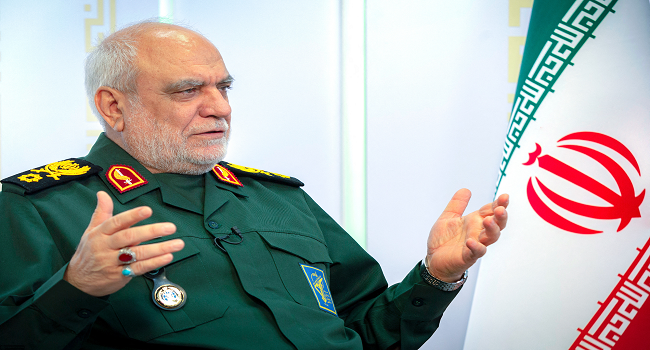
Iran’s Revolutionary Guards confirmed that their intelligence chief, Majid Khademi, was killed “at dawn” on Monday during strikes carried out by Israeli forces.
The Guards said the attack was part of coordinated US-Israeli operations targeting Iranian military infrastructure.
Israeli Defence Minister Israel Katz confirmed that Israel’s military was responsible for the strike.
He described Khademi as one of the main figures behind attacks on Israeli civilian areas.
“Katz called Khademi one of the direct perpetrators of these war crimes and one of the top three officials in the organisation,” the Israeli defence chief said, warning that Israel would continue targeting Iranian commanders.
“We will continue to hunt them one by one,” Katz added.
The conflict has spread beyond the two countries, with Iranian missiles and drones targeting locations in Israel as well as in Kuwait and the United Arab Emirates.
At the same time, Israeli strikes have hit multiple locations inside Iran and parts of Lebanon, where Israeli forces are battling the Tehran-backed militant group Hezbollah.
Tensions rose further after Trump issued a stark warning demanding that Iran reopen the Strait of Hormuz to global shipping by Tuesday evening.
Iran has effectively blocked the waterway, one of the world’s most critical energy chokepoints, causing oil and gas prices to surge and forcing countries to seek alternative shipping routes.
In a strongly worded social media post, Trump warned that failure to comply could result in the destruction of Iranian civilian infrastructure.
Iran’s Deputy Foreign Minister Kazem Gharibabadi condemned the threat, accusing the US president of publicly threatening to commit war crimes.
Tehran has also vowed a strong response if US forces follow through on the threat.
Iranian officials warned that any attack on civilian infrastructure would trigger “much more devastating” retaliation.
The Revolutionary Guards also declared that the Strait of Hormuz would “never return to its former status” for the United States and Israel.
The escalating confrontation has deepened concerns among global leaders about the potential for a wider regional conflict.
Energy markets remain on edge as the disruption of shipping through the Strait of Hormuz threatens global oil supplies.
Analysts warn that prolonged instability in the Gulf could drive further spikes in energy prices and disrupt international trade.
As military operations continue and diplomatic efforts struggle to gain traction, the region remains braced for further escalation.