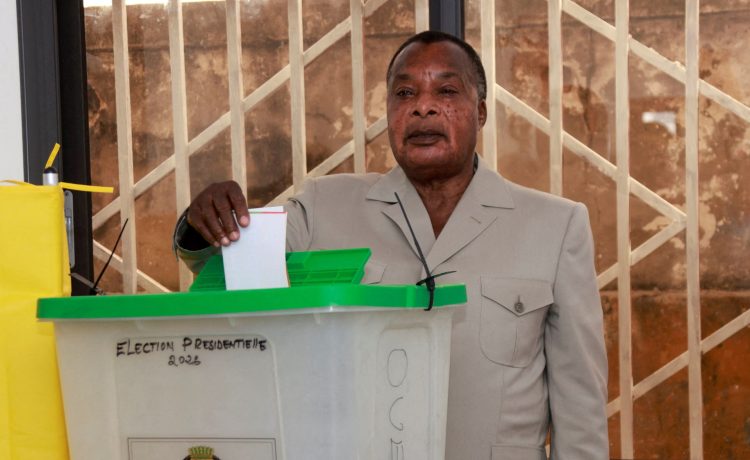
In a tightly managed election, 82-year-old Denis Sassou Nguesso secured another five-year term in the Republic of Congo with an overwhelming 94.82% of the vote. The process, widely criticised as a formality, was marked by an internet blackout, opposition boycotts, and the continued imprisonment of key political rivals.
State media reported an 84.65% voter turnout, though independent observers noted largely deserted polling stations in the capital, Brazzaville.
Nguesso’s victory allows him and his inner circle to consolidate control over the state’s political apparatus while preparing for a succession plan within the ruling Congolese Labor Party. Political analysts warn that by sidelining opposition parties and denying genuine democratic representation, the tightly controlled process merely postpones an inevitable power struggle.
As Nguesso approaches what is expected to be his final term, tensions within the party are already rising over who will succeed him. Experts suggest that this high-stakes succession battle could eventually fracture the government and pose risks to both domestic governance and regional stability.
Despite the lopsided official results, the election underscores the continued challenges facing democracy in the Republic of Congo and the precarious balance of power within its ruling elite.