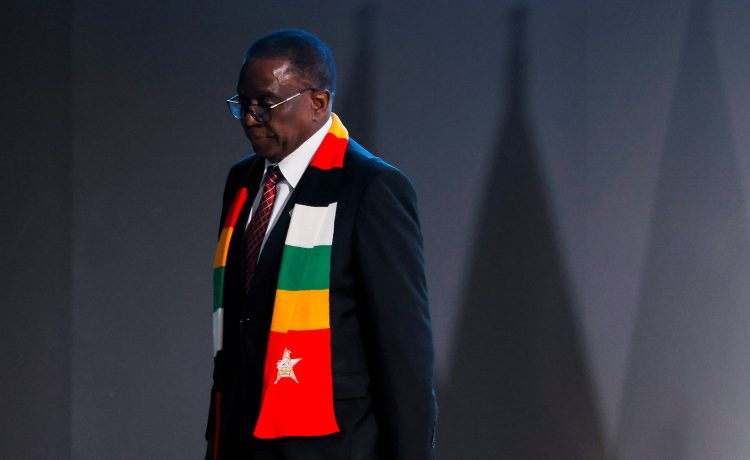
Zimbabwe’s cabinet has approved draft legislation seeking to amend the constitution to extend presidential terms from five years to seven, a move that could allow President Emmerson Mnangagwa to remain in office until 2030.
The bill, presented to cabinet on Tuesday, also proposes that the president be elected by parliament rather than through a direct popular vote. Additional changes include granting the president the power to appoint 10 more senators, increasing the Senate’s membership to 90 seats.
Justice Minister Ziyambi Ziyambi told a news conference that the draft legislation would be forwarded to the Speaker of Parliament and published in the official gazette before lawmakers begin debate.
According to a cabinet statement, the proposed amendments are intended to “enhance political stability and policy continuity to allow development programmes to be implemented to completion.”
Mnangagwa, 83, is currently expected to step down in 2028 after completing two five-year terms. However, the proposed reforms have intensified an ongoing succession battle within the ruling ZANU-PF party.
The president came to power in 2017 after the military ousted longtime leader Robert Mugabe. Since then, opposition politicians have repeatedly criticised efforts by the governing party to extend his tenure.
ZANU-PF’s so-called “2030 agenda” had circulated for months before being formally adopted as party policy, prompting opposition figures to vow to “defend the constitution against its capture.”
Jameson Timba, a senior leader in Zimbabwe’s divided opposition movement, described the cabinet’s approval of the bill as “politically destabilising.”
In a statement, he said a coalition known as the Defend the Constitution Platform would consult lawyers and engage regional and international partners in efforts to challenge the proposed changes.
ZANU-PF has governed Zimbabwe since independence from the United Kingdom in 1980. The party holds a two-thirds majority in the lower house of parliament and maintains overwhelming control of the upper house, largely through traditional leaders and allied members who typically vote with it. This majority gives the party the numbers required to amend the constitution.
However, analysts and opposition figures argue that any constitutional amendment that effectively extends an incumbent president’s tenure should be subjected to a national referendum.
“Any amendment which has the ‘effect’ of extending an incumbent’s tenure should be subjected to a referendum,” opposition politician David Coltart said. “They know that if that happens, they will fail, so they will do all in their power to prevent a referendum from happening.”
Mnangagwa, first elected in 2018 and re-elected in 2023, has faced accusations of enabling corruption and suppressing human rights. Many Zimbabweans continue to grapple with economic hardship despite official reports of economic growth.
Recent attempts to protest against the proposed extension of his rule have been met with a police crackdown, resulting in numerous arrests.