The United States Department of State is planning to pause immigrant visa processing for nationals of 75 countries, including Nigeria, over concerns that applicants from those countries are more likely to depend on welfare and public benefits.
The pause, expected to take effect from January 21, will remain in place indefinitely while the State Department completes a reassessment of its immigrant visa screening and vetting procedures.
Countries affected span Africa, the Middle East, Asia, Europe, and Latin America. They include Nigeria, Somalia, Egypt, Iran, Iraq, Yemen, Afghanistan, Russia, Brazil, and Thailand, among others.
According to a State Department memo first reported by Fox News Digital, US embassies and consular offices have been directed to refuse visas under existing “public charge” provisions of immigration law while the review is ongoing.
The memo reportedly instructs consular officers to apply stricter standards in assessing whether applicants are likely to rely on public assistance in the United States. Factors to be considered include age, health status, financial capacity, English proficiency, prior use of government cash assistance, and potential need for long-term medical care. Older or overweight applicants may also face increased scrutiny.
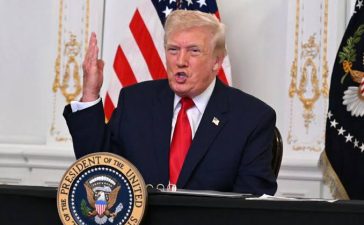
President Donald Trump had earlier published data on welfare dependency rates among immigrant households, noting that about 33.3 per cent of Nigerian immigrant households received some form of public assistance.
Confirming the policy direction, State Department spokesperson Tommy Piggott said the move was aimed at preventing abuse of US welfare systems.
“The State Department will use its long-standing authority to deem ineligible potential immigrants who would become a public charge on the United States and exploit the generosity of the American people,” Piggott said.
“Immigration from these 75 countries will be paused while the State Department reassesses immigration processing procedures to prevent the entry of foreign nationals who would take welfare and public benefits,” he added.
In November 2025, a State Department cable sent to diplomatic missions worldwide instructed consular officers to enforce expanded screening rules under the “public charge” provision of US immigration law.
The guidance directed officers to deny visas to applicants deemed likely to rely on public benefits, weighing a broad range of criteria including health, age, education, financial resources, and overall self-sufficiency.
Although the public charge provision has existed in US immigration law for decades, its enforcement has varied across administrations. While consular officers have traditionally exercised wide discretion, President Trump’s administration expanded the definition in 2019 to cover a broader range of public benefits.
The planned visa pause is expected to significantly affect migration flows from the listed countries, particularly those with high numbers of family-based and employment-based immigrant visa applicants.