The United States has frozen the assets and properties of eight Nigerians accused of having links to Boko Haram and the Islamic State of Iraq and the Levant (ISIL).
The action was contained in a 3,000-page document dated February 10 and released by the Office of Foreign Assets Control, a unit of the United States Department of the Treasury.
The document, titled the Specially Designated Nationals and Blocked Persons List, identified individuals sanctioned for terrorism-related activities, cybercrime offences, and other security threats.
The pronouncement follows recent recommendations by members of the United States Congress for visa bans and asset freezes on persons and groups accused of violations of religious freedom and persecution of Christians in Nigeria.
Among those recommended by US lawmakers were former Kano State Governor, Rabiu Kwankwaso; the Miyetti Allah Cattle Breeders Association of Nigeria; and Miyetti Allah Kautal Hore.
According to OFAC, the publication serves as a reference tool to provide notice of actions taken against Specially Designated Nationals whose property and interests have been blocked.
“This publication of Treasury’s Office of Foreign Assets Control is designed as a reference tool providing actual notice of actions by OFAC with respect to Specially Designated Nationals and other persons… whose property is blocked,” the agency stated.
Among the Nigerians listed is Salih Yusuf Adamu, also known as Salihu Yusuf, born August 23, 1990. He was identified as having ties to Boko Haram and was reported to hold a Nigerian passport.
Yusuf was among six Nigerians convicted in the United Arab Emirates in 2022 for setting up a Boko Haram cell to raise funds for insurgents in Nigeria. The group was found guilty of attempting to send $782,000 from Dubai to Nigeria.
Babestan Oluwole Ademulero, born March 4, 1953, was designated under terrorism-related sanctions. He appeared under several aliases, including Wole A. Babestan and Olatunde Irewole Shofeso.
Also designated was Abu Abdullah ibn Umar Al-Barnawi, also known as Ba Idrisa. He was reportedly born between 1989 and 1994 in Maiduguri, Borno State.
Abu Musab Al-Barnawi, also referred to as Habib Yusuf, was listed with varying birth years between 1990 and 1995. He was identified as a Boko Haram leader and sanctioned under terrorism provisions.
Khaled (or Khalid) Al-Barnawi, born in 1976 in Maiduguri, was also listed. He appeared under several aliases, including Abu Hafsat and Mohammed Usman.
Ibrahim Ali Alhassan, born January 31, 1981, was reported to reside in Abu Dhabi, United Arab Emirates, and was linked to Boko Haram.
Abu Bakr ibn Muhammad ibn Ali Al-Mainuki, also known as Abu-Bilal Al-Minuki, born in 1982 in Mainok, Borno State, was identified as having ties to ISIL.
Nnamdi Orson Benson, born March 21, 1987, was listed under cyber-related sanctions and reported to hold a Nigerian passport.
Under the sanctions, all property and interests of the listed individuals within US jurisdiction are blocked. US persons are generally prohibited from engaging in transactions with them.
The sanctions were imposed pursuant to Executive Order 13224, which targets individuals and entities involved in terrorism.
The United States officially designated Boko Haram a Foreign Terrorist Organisation in 2013. According to the United States Department of State, the group has carried out numerous attacks in northern Nigeria and across the Lake Chad Basin since 2009.
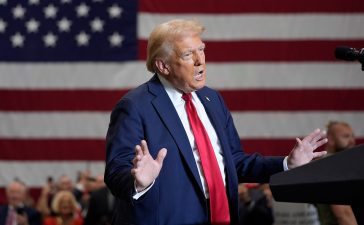
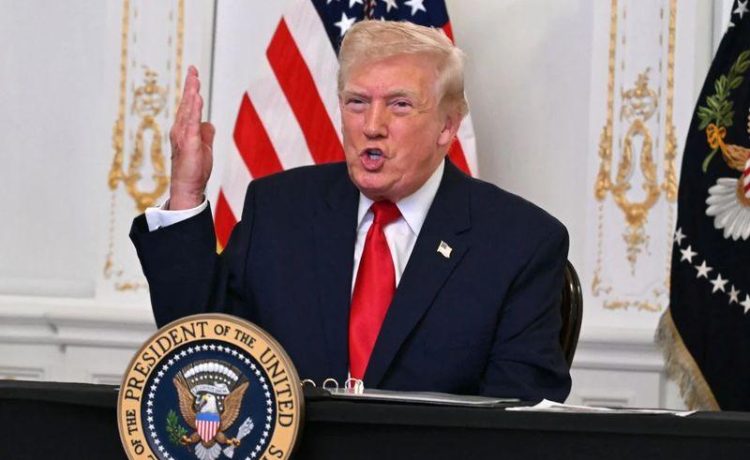
In October 2025, US President Donald Trump announced that Nigeria would be added to the State Department’s list of Countries of Particular Concern over alleged religious persecution.
Nigeria was first designated as a Country of Particular Concern in 2020 under Trump. However, former President Joe Biden removed the country from the list after assuming office.