Venezuelan opposition leader María Corina Machado presented her Nobel Peace Prize medal to U.S. President Donald Trump during a high‑profile meeting at the White House on January 15, 2026, seeking to solidify U.S. engagement in Venezuela’s political transition and acknowledge what she described as Trump’s role in advancing freedom for her country.
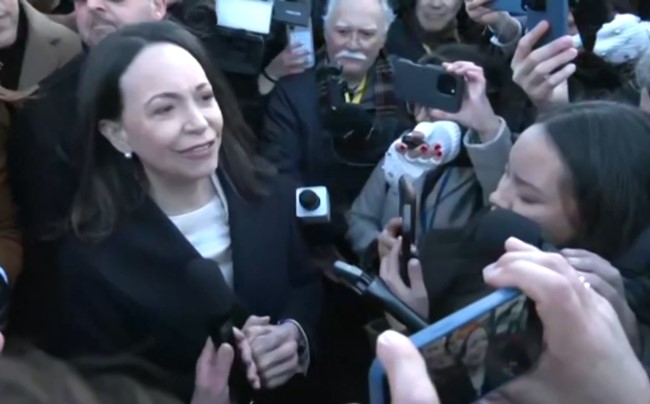
Machado, who was awarded the Nobel Peace Prize in 2025 for her advocacy for democratic rights and peaceful transition in Venezuela, called the gesture a “recognition for his unique commitment with our freedom” after the U.S. military‑backed capture of former Venezuelan President Nicolás Maduro and his wife in early January.
Symbolism and Policy Context
The meeting at the White House marked the first in‑person encounter between Machado and the U.S. president. After leaving the Oval Office, she addressed supporters outside the White House, asserting that “we can count on President Trump” as she continued to advocate for a democratic transition in Venezuela.
President Trump acknowledged Machado’s gesture on social media, describing it as “a wonderful gesture of mutual respect” and praising her courage and resilience. However, despite the symbolic exchange, Trump has not formally endorsed Machado as Venezuela’s next leader, highlighting the pragmatic contours of U.S. policy as officials engage with Venezuela’s acting head of state, Delcy Rodríguez, the former vice‑president under Maduro.
From a policy perspective, the interaction reflects the complex dynamics of U.S. foreign policy toward Venezuela: balancing support for democratic figures like Machado with diplomatic engagement of interim authorities to maintain stability and leverage cooperation on issues such as oil, regional security, and prisoner releases.
Nobel Prize Rules and Diplomatic Implications
Internationally, the gesture sparked discussion about the non‑transferable nature of Nobel Peace Prizes. The Norwegian Nobel Institute has reiterated that, while a medal object may change hands, the title and recognition of the award remain solely with the laureate and cannot be transferred under the Nobel Foundation’s statutes.
The symbolic presentation of the medal at the White House reflects both Machado’s diplomatic strategy and the broader policy calculus in Washington, where U.S. officials are navigating post‑Maduro governance, contested elections, and Venezuela’s path to democratic reforms.
As the situation evolves, the intersection of symbolism and realpolitik in U.S.–Venezuelan relations will continue to shape foreign policy decisions and influence discussions among lawmakers, international partners, and Venezuelan stakeholders monitoring the future of governance in their country.