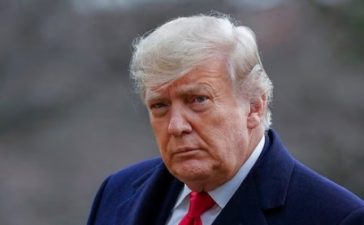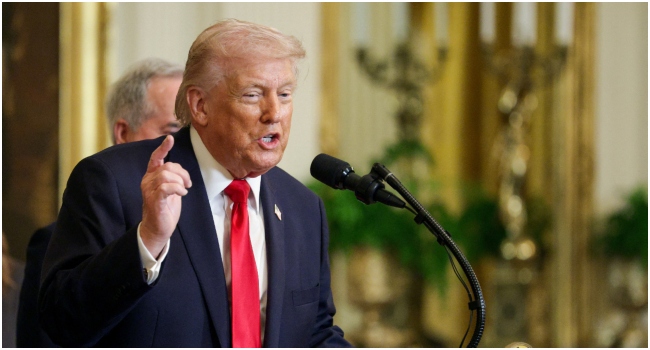
President Donald Trump on Thursday announced he will take executive action to pay 50,000 Transportation Security Administration (TSA) officers as Congress stalls on a deal to address staffing shortages that have disrupted travel nationwide.
Trump said he instructed the Department of Homeland Security (DHS) “to immediately pay our TSA Agents in order to address this Emergency Situation, and to quickly stop the Democrat Chaos at the Airports. It is not an easy thing to do, but I am going to do it!”
The move comes amid a partial government shutdown that began in February, during which nearly 500 TSA officers have resigned, leaving some airports facing severe staffing gaps. Absenteeism has spiked over 10% nationally, with some major hubs—including JFK in New York, Houston, Baltimore, New Orleans, and Atlanta—reporting rates above 30%.
Senate Majority Leader John Thune described the measure as a “short-term solution” without specifying how long the pay will last, while Representative Bennie Thompson questioned the legal framework for Trump’s action.
Chris Sununu, CEO of Airlines for America, praised the effort to pay TSA officers but urged Congress to enact a permanent solution to prevent future disruptions.
The congressional deadlock involves Democrats withholding DHS funding to demand changes in immigration enforcement following high-profile incidents, while Republicans have resisted separating TSA funding from other DHS operations.
Currently, TSA is struggling to manage increased passenger traffic during spring break, which is approximately 5% higher than last year. Long delays at security checkpoints have prompted hundreds of U.S. Immigration and Customs Enforcement (ICE) officers to assist with ID checks, crowd control, and logistics at 14 airports. ICE and other DHS law enforcement personnel continue to receive pay during the shutdown.
The executive action highlights the ongoing tensions in Congress over DHS funding, the challenge of maintaining national security operations during a shutdown, and the urgent need to stabilize airport operations as travel surges.