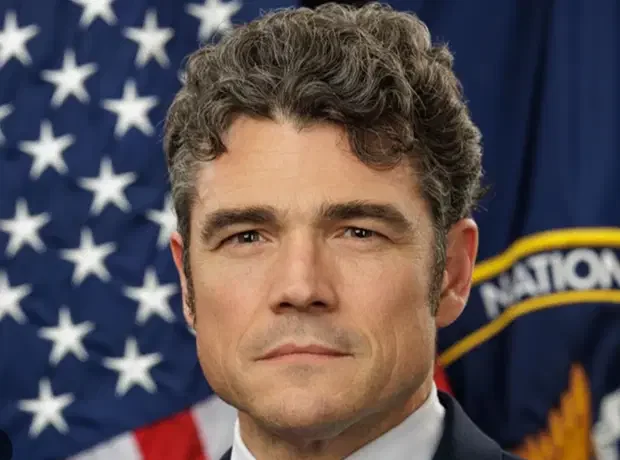
The Director of the US National Counterterrorism Center, Joe Kent, has resigned over the ongoing war involving Iran, marking the most high-profile departure from the administration of Donald Trump since the conflict began.
Kent, who advised both the US president and the Director of National Intelligence on terror threats, announced his resignation in a letter posted on X. In the letter, he argued that Iran posed no immediate threat to the United States and said he could not support the war.
“I cannot support sending the next generation off to fight and die in a war that serves no benefit to the American people,” he wrote.
His resignation came on the same day Iran’s new leader, Mojtaba Khamenei, rejected a de-escalation proposal conveyed through intermediaries.
Meanwhile, Israel said it had carried out overnight strikes that killed a key Iranian political figure, Ali Larijani, who served as National Security Chief. If confirmed, his death would make him the most senior Iranian figure killed since Supreme Leader Ali Khamenei reportedly died at the start of the war.
Israel’s Defence Minister, Israel Katz, also said a separate strike killed the commander of Iran’s Basij paramilitary force, Gholamreza Soleimani, along with other senior officials. Iran has confirmed Soleimani’s death but has yet to verify the killing of Larijani.
The escalating conflict has drawn global concern, with the United Nations warning of a worsening humanitarian crisis. According to the UN’s World Food Programme, up to 45 million more people could face acute hunger if the conflict continues through June, pushing global hunger levels to record highs.
At the same time, the United Arab Emirates signaled it could join international efforts to secure the vital Strait of Hormuz. A senior adviser to the UAE president, Anwar Gargash, said the country may support a US-led initiative to ensure safe passage through the key oil shipping route.
Kent’s resignation also reflects growing dissent within Trump’s political base, particularly among supporters of the “Make America Great Again” movement, many of whom have criticised the administration’s involvement in another Middle East conflict despite earlier promises to reduce foreign military engagements.
Despite his criticism, Kent praised past US actions, including the 2020 assassination of Iranian general Qassem Soleimani, as examples of decisive military strategy without prolonged conflict.
As tensions continue to rise, the war threatens to deepen instability across the Middle East and beyond, with mounting political, military, and humanitarian consequences.