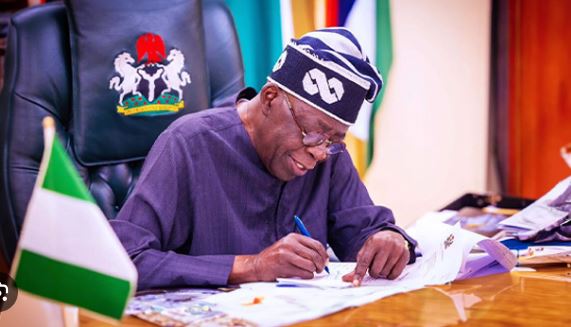
President Bola Ahmed Tinubu has transmitted the 2026–2028 Medium Term Expenditure Framework (MTEF) and Fiscal Strategy Paper (FSP) to the House of Representatives, marking a major step in the Federal Government’s preparations for the 2026 Appropriation Bill. The documents, which outline Nigeria’s fiscal direction over the next three years, were presented for legislative consideration and approval during Wednesday’s plenary session.
The President’s letter was read on the floor of the House by Deputy Speaker Benjamin Kalu, who presided over proceedings. According to the communication, President Tinubu urged lawmakers to prioritise the review and passage of the MTEF and FSP, emphasising their importance in shaping the government’s medium-term economic agenda.
The letter reads in part: “It is with pleasure that I forward the 2026 to 2028 Medium-Term Expenditure Framework and Fiscal Strategy Paper, for the kind consideration and approval of the House of Representatives.” The President noted that early approval of the framework would ensure timely preparation and presentation of the 2026 national budget, in line with the Federal Government’s commitment to sustaining a predictable budget cycle.
President Tinubu further disclosed that the Federal Executive Council (FEC), at its meeting of December 3, 2025, thoroughly reviewed and approved the MTEF and FSP. This approval provides the executive with the fiscal assumptions and macroeconomic parameters that will underpin the 2026 budget.
Last week, the Federal Executive Council unveiled the major fiscal projections contained in the new medium-term framework. These include an oil price benchmark of $64.85 per barrel, a production estimate to be announced after consultations with industry stakeholders, and a budget exchange rate of N1,512 to the US dollar. The framework also outlines government expectations on inflation trends, revenue mobilisation, tax reforms, and strategies aimed at strengthening Nigeria’s fiscal resilience.
The MTEF/FSP remains one of the most critical instruments in Nigeria’s annual budget process, as it provides a three-year roadmap for expenditure targets, borrowing plans, revenue projections, and fiscal discipline measures. Analysts say this year’s framework is particularly important as the administration seeks to stabilise the economy, deepen investor confidence, and navigate ongoing reforms—especially in the areas of foreign exchange management, energy transition, and subsidy restructuring.
With the documents now before the National Assembly, attention shifts to how quickly lawmakers will act. Committees responsible for finance, appropriation, national planning, and loans and debts are expected to commence interactive sessions with key Ministries, Departments and Agencies (MDAs). These engagements typically scrutinise the feasibility of revenue estimates, the government’s deficit position, debt servicing capacity, and the assumptions behind oil-related projections.
Legislators are also expected to interrogate the Federal Government’s strategy for closing fiscal gaps, improving non-oil revenue, and strengthening tax administration—as Nigeria continues efforts to expand the tax base without overburdening businesses and households.
Experts note that the early submission of the MTEF and FSP is consistent with the administration’s goal of maintaining a January–December budget cycle, which Nigeria has adhered to for four consecutive years. A timely approval by the House and Senate would pave the way for President Tinubu to present the 2026 Appropriation Bill before the end of the year, ensuring minimal disruption to government spending and project implementation.
The coming weeks will therefore be crucial, as lawmakers dissect the assumptions, projections, and policy thrusts contained in the fiscal framework. The decisions reached will shape Nigeria’s economic trajectory from 2026 through 2028, influencing public investments, debt policy, and the government’s overall reform agenda.