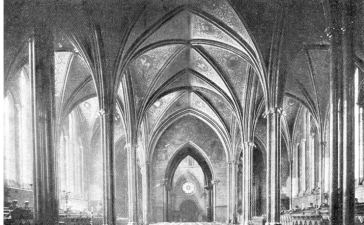
A theological reflection circulating on the True Christian Faith platform is challenging a deeply rooted belief in modern Christianity — the idea that God lives in church buildings.
The writer argues that under the New Covenant, God no longer dwells in temples made with human hands but in His people.
Quoting Acts 17:24, the reflection stresses that “The God who made the world and everything in it… does not dwell in temples made with hands.”
According to the author, this truth is not symbolic. It is a foundational teaching of apostolic Christianity.
Understanding the Old Covenant Context
The reflection explains that under the Mosaic covenant, God’s presence was associated with the tabernacle and later the temple.
In Exodus 25:8, God instructed the Israelites to build a sanctuary so He could dwell among them. The tabernacle and Solomon’s temple became central to Israel’s worship system.
However, even in the Old Testament, there were signs that God could not be confined to a structure. In 1 Kings 8:27, Solomon acknowledged that heaven itself could not contain God.
The temple symbolized covenant relationship, but it was never meant to limit God’s presence.
Christ Fulfilled the Temple System
The turning point, the writer argues, came through Jesus Christ.
In John 2:19–21, Jesus referred to His body as the temple. His crucifixion and resurrection marked a decisive shift.
The tearing of the temple veil in Matthew 27:51 symbolized the end of restricted access to God. Access was no longer mediated through architecture but through Christ Himself.
Hebrews 9–10 further explains that the temple system was a shadow. Christ became the substance.
Believers as the Temple of the Spirit
The New Testament presents a radical truth: believers are now the temple of God.
In 1 Corinthians 3:16, Paul writes that God’s Spirit dwells in believers. Ephesians 2:19–22 describes Christians as being built together into a dwelling place for God.
The reflection highlights that the early church met in homes and public spaces for centuries. The Greek word ekklesia referred to people, not a building.
According to the author, sacred geography ended at Calvary.
Warning Against Subtle Idolatry
While acknowledging that church buildings are useful for worship and organization, the reflection warns against elevating them to sacred status.
The danger, it says, arises when reverence shifts:
- From God to architecture
- From Christ to brand identity
- From the Spirit to stage production
- From holiness to atmosphere
Jesus’ words in John 4:21–23 are cited to emphasize that true worship is no longer tied to a physical location but is defined by spirit and truth.
The Indwelling Spirit
The promise of the New Covenant in Ezekiel 36:26–27 was fulfilled at Pentecost in Acts 2. God’s Spirit was poured out on people, not on a renovated temple.
In 1 Corinthians 6:19, believers are described as temples of the Holy Spirit.
The reflection stresses that holiness is no longer about entering sacred space. Instead, believers themselves become sacred space through the indwelling Spirit.
A Call to Return to Apostolic Simplicity
The piece concludes with a pastoral appeal.
It urges church leaders to teach that:
- The church is people, not property.
- God’s presence is covenantal, not geographical.
- Spiritual maturity outweighs architectural magnificence.
- The Holy Spirit indwells believers permanently.
Quoting Colossians 1:27 — “Christ in you, the hope of glory” — the writer insists that the true glory of God now resides in redeemed hearts.
The message is clear: buildings may host worship, but they do not contain God.
The future of the church, the reflection concludes, will not be secured by grand structures but by Spirit-filled lives.