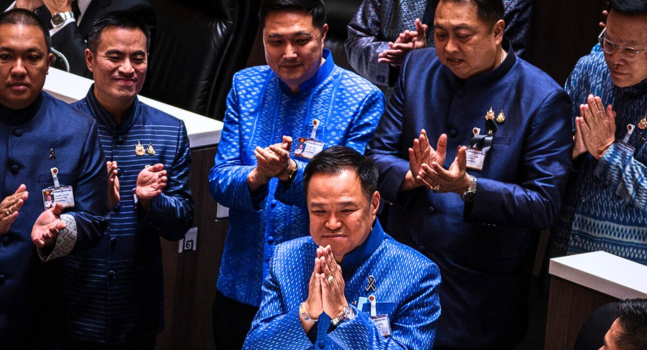
Thailand’s new parliament on Thursday formally elected Anutin Charnvirakul as prime minister, extending his tenure after the conservative leader’s Bhumjaithai party dominated recent elections. House Speaker Sophon Zaram announced that Anutin received 293 votes from lawmakers, surpassing the majority threshold, while his progressive rival, Natthaphong Ruengpanyawut, secured 119 votes and 86 MPs abstained.
“This parliament has voted for Anutin Charnvirakul to become prime minister,” Sophon said on the legislature floor. Anutin, who had first assumed office in September, expressed commitment to addressing public concerns promptly.
The new government faces multiple challenges, including rising fuel prices following Middle East conflicts, slow economic growth, and lingering tensions along Thailand’s border with Cambodia. Anutin’s Bhumjaithai party, which campaigned on a pro-military and pro-monarchy platform, pledged border fortification and the recruitment of 100,000 volunteer soldiers, contributing to its best electoral performance yet.
The Pheu Thai party, led by jailed former premier Thaksin Shinawatra’s daughter, Paetongtarn Shinawatra, joined a coalition with Bhumjaithai and 14 smaller parties, securing Anutin’s re-election. Meanwhile, the reformist People’s Party, which had polled strongly ahead of the election, will now serve as the opposition, with some of its MPs facing potential ethics sanctions over royal insult law reforms.
Economic and security issues remain front and center. Analysts note the government must address the economic fallout from global conflicts, particularly the Israel-US strikes on Iran, which have disrupted fuel supplies, and ongoing border disputes with Cambodia along the 800-kilometre frontier. Political scientist Yuttaporn Issarachai highlighted that public focus has shifted predominantly to economic concerns, including inflation and the struggling tourism sector.
Despite these hurdles, Anutin pledged to leverage external crises as opportunities for Thailand, signaling a proactive stance in navigating both domestic and international challenges in his second term.