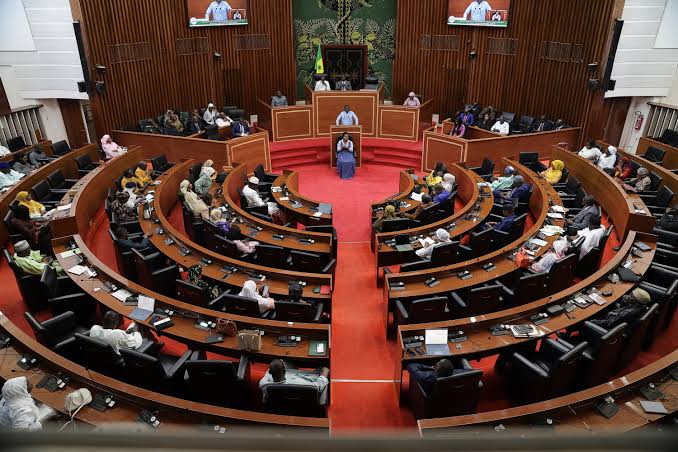
Lawmakers in Senegal on Wednesday endorsed a new bill that doubles the maximum prison term for same-sex sexual acts and criminalizes efforts to promote or finance homosexuality. The vote passed with 135 in favour, none against, and three abstentions, marking the final step for adoption.
The legislation fulfills a campaign promise of the government that came to power in 2024, led by President Bassirou Diomaye Faye and Prime Minister Ousmane Sonko.
Under Senegal’s previous penal code, last amended in 1966, “acts against nature” carried a prison term of up to five years and fines of up to 1,500,000 CFA francs ($2,676). Proponents of the new bill argued that the old law was vague and insufficiently strict.
The updated legislation increases penalties to prison terms of up to 10 years and fines of up to 10 million CFA francs (roughly $17,700). It prohibits judges from granting suspended sentences or reducing prison terms below the minimum.
The law explicitly includes acts related to homosexuality, bisexuality, transsexuality, zoophilia, and necrophilia. Individuals found guilty of promoting or financing such acts also face imprisonment.
In the weeks leading up to Wednesday’s vote, supporters of the law, including lawmakers from the ruling Pastef party, staged multiple demonstrations in Dakar, carrying signs with rainbows crossed out and chanting slogans against homosexuality.
The period was also marked by a surge in arrests of men suspected of “acts against nature” and, in some cases, “voluntary transmission” of HIV, a crime punishable by up to 10 years in prison. According to the International Federation for Human Rights, 27 men were arrested between February 9 and February 24.
Senegal’s new law reflects a broader trend of anti-LGBT legislation in West Africa. Last year, Burkina Faso criminalized same-sex sexual relations for the first time with prison terms up to five years. In Ghana, lawmakers are considering a bill that would increase penalties for same-sex acts from three to five years and impose jail time for promoting LGBTQ+ activities.
Human rights groups have criticized the new law, warning that it could exacerbate discrimination and violence against sexual minorities in the region.