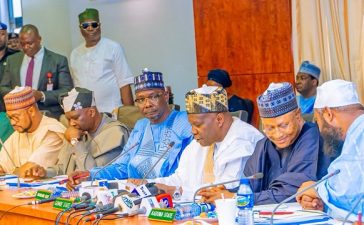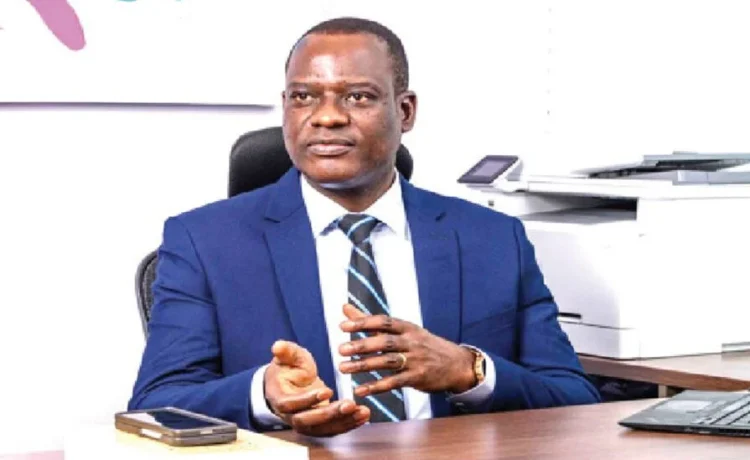
The Nigerian Senate on Wednesday confirmed the appointment of Taiwo Oyedele as Nigeria’s new Minister of State for Finance after nearly three hours of screening and questioning by lawmakers across party lines.
During the confirmation hearing, Oyedele presented a range of policy ideas aimed at strengthening government revenue, improving fiscal discipline, and reducing Nigeria’s dependence on crude oil earnings.
Speaking on the country’s vulnerability to oil price fluctuations, Oyedele suggested that Nigeria could adopt forward crude sales, a strategy used by several oil-producing nations to stabilise income.
“One strategy used in several countries is selling crude forward. Nigeria can lock in a price for a portion of our crude for a period of time,” he said.
According to him, such an approach could guarantee funding for government budgets while providing greater price stability for Nigerians who often experience sudden changes in fuel prices.
Oyedele also addressed the persistent issue of delayed payments to contractors executing government projects. He explained that these delays often inflate project costs due to what he described as a “trust deficit premium.”
“In some cases, a contract initially valued at N1bn could rise to N2bn simply because contractors factor in the risk of delayed payments,” he noted.
To tackle the issue, Oyedele proposed that government contracts should only be awarded based on funds that are already available.
The newly confirmed minister emphasised that Nigeria has focused too heavily on taxation and crude oil revenue, leaving other sectors largely untapped.
“For many years as a country, we have disproportionately focused on taxation and oil and gas, and that has taken our attention away from other areas where we can generate revenue,” he said.
He highlighted the solid minerals sector as a major opportunity for revenue generation, noting that policy uncertainty has been a major barrier to growth in the industry.
Oyedele said efforts by the Federal Ministry of Solid Minerals Development must be supported by a stable and predictable policy environment, adding that proposals may soon be brought before the National Assembly.
Another key focus of Oyedele’s presentation was the need for more realistic budgeting. He observed that many of Nigeria’s recent budgets have been overly ambitious relative to the country’s revenue.
“When we have budgets, we need to ensure that there is funding behind them and that there are releases so that we can execute them — 100 per cent if possible — particularly for capital expenditure,” he said.
He noted that when both federal and state government budgets are combined, nearly half are currently financed through deficits, a situation he said requires urgent attention.
Outlining his immediate priorities, Oyedele said he would begin with a clear financial assessment of government obligations, particularly debts owed to contractors.
“If we owe contractors, we should know it. We should say: as of today, this is how much we owe contractors, this is how much we have, this is the gap, and this is how we plan to raise the money,” he said.
He also stressed that government spending must directly benefit citizens, especially after the removal of fuel subsidies increased government revenues.
“The only way we can make that sacrifice worthwhile is to spend that money in areas of priority for the people,” he explained.
According to Oyedele, investments in infrastructure connecting farms to markets could quickly boost productivity and economic activity.
Following the screening session, the Senate formally confirmed his appointment.
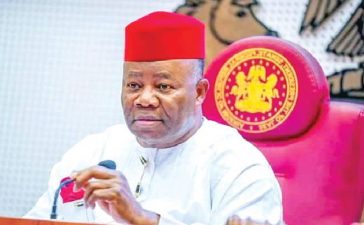
Senate President Godswill Akpabio commended Bola Ahmed Tinubu for appointing Oyedele, describing the decision as putting “a round peg in a round hole.”
Akpabio also praised Oyedele’s experience and expertise, expressing confidence that he would contribute significantly to Nigeria’s economic management.