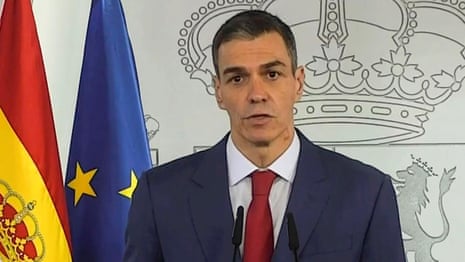
Spanish Prime Minister Pedro Sánchez delivered a forceful response to US President Donald Trump after Trump threatened a trade embargo on Spain over Madrid’s refusal to allow the US to use joint military bases at Morón and Rotafor for strikes against Iran.
In a televised address, Sánchez reiterated Spain’s position of opposing war, describing it as a “breakdown of international law,” and drew parallels with conflicts in Ukraine, Gaza, and the Iraq War, which he said had failed to protect ordinary citizens.
Trump had labelled Spain a “terrible partner” in NATO and vowed to “cut off all trade” with the country. He criticized Spain’s failure to meet a defence budget target of 5% of GDP and previously clashed with Sánchez over US actions in Venezuela.
Sánchez avoided directly naming Trump’s threat in his address but warned that responding to one illegality with another would trigger “the great catastrophes of humanity.” He stressed Spain’s commitment to peace and international legality, a stance aligned with the country’s prior positions on Gaza and Ukraine.
The Spanish government is reportedly studying economic measures to cushion citizens against potential fallout from escalating tensions. Sánchez’s Socialist administration has faced domestic political pressure due to parliamentary fragility and allegations of corruption among coalition partners. Standing up to Trump may consolidate public support: a CIS poll found 77% of Spaniards held a “bad” or “very bad” view of the US president.
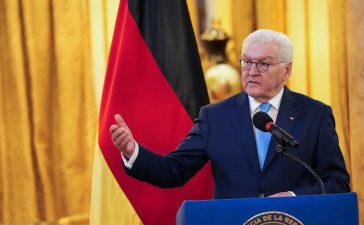
Sánchez’s stance contrasts with that of German Chancellor Friedrich Merz, who described regime change in Iran as potentially beneficial, and with some NATO allies that have signalled readiness for military involvement.
The White House claimed Spain had agreed to cooperate militarily following Trump’s warning; Spanish Foreign Minister José Manuel Albares denied this, affirming that Spain’s position remains unchanged.
Spain’s firm stance underscores a broader European divide over how to respond to escalating tensions in the Middle East, balancing military alliances, trade interests, and public opinion.