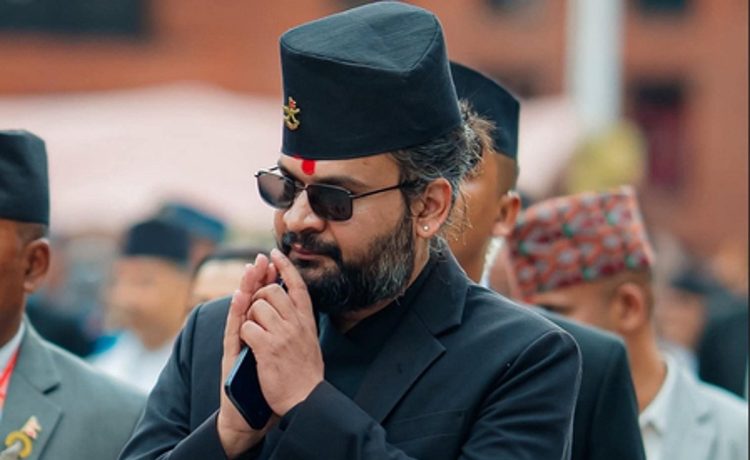
Rapper-turned-politician Balendra Shah is set to be sworn in as Nepal’s prime minister after securing a landslide victory in the country’s first general election since last year’s youth-led protests.
The 35-year-old leader, popularly known as Balen, represents a dramatic shift in Nepali politics, with his promise of reform resonating strongly among voters frustrated by corruption, nepotism and decades of elite political control.
Ahead of his inauguration on Friday, Shah released a new rap track celebrating the country’s future and calling for national unity.
“Undivided Nepali, this time history is being made,” he rapped in the song, which attracted more than two million views within hours of its release.
The track reflects Shah’s origins in Nepal’s underground rap scene, where he built a reputation for using music to criticise corruption and social inequality.
Shah secured victory in the elections as the prime-ministerial candidate of the Rastriya Swatantra Party, a relatively new political movement that has gained popularity among younger voters seeking change.
His rapid rise in politics began in 2022 when he won the mayoral election in Kathmandu as an independent candidate, defeating established political parties that had dominated the country’s political landscape for decades.
During his time as mayor, Shah launched initiatives aimed at cleaning up the capital city, preserving indigenous heritage and tackling corruption within municipal governance.
He also introduced a controversial crackdown on illegal structures in the city, demolishing unauthorised buildings in an effort to reduce congestion and improve urban planning. While the campaign eased traffic in some areas, it also sparked criticism from street vendors and residents in informal settlements.
Born in 1990 in Naradevi, Kathmandu, Shah grew up in a modest family. His father works as an Ayurvedic practitioner while his mother focused on raising the family.
After completing his early education, Shah pursued engineering studies in Kathmandu and later in the Indian state of Karnataka.
He first gained national attention in 2013 after winning a popular rap battle in Nepal, where his sharp lyrics captured the frustrations of young people who felt marginalised by the country’s political system.
Over the years, he released several popular tracks addressing corruption, economic hardship and social injustice in the Himalayan nation.
One of his best-known songs, Balidan, which means sacrifice, has garnered more than 14 million views on YouTube.
Shah’s political message gained further momentum during the mass protests that erupted across Nepal last September, when demonstrations against a government ban on social media escalated into broader unrest over corruption, unemployment and economic stagnation.
During the protests, demonstrators adopted his song Nepal Haseko—meaning “Smiling Nepal”—as one of their anthems.
The protests turned deadly, with 77 people reported killed, many of them protesters shot by police.
Despite his rising popularity, Shah adopted an unconventional approach during his campaign for prime minister, largely avoiding traditional media interviews.
Instead, he communicated directly with voters through social media platforms, outlining an ambitious reform agenda focused on fighting corruption, strengthening the judiciary and creating 1.2 million jobs.
The strategy proved effective.
In the 5 March general elections, the Rastriya Swatantra Party swept to victory, delivering a major upset to Nepal’s political establishment.
In one of the most notable outcomes of the election, Shah defeated former prime minister KP Sharma Oli in the Jhapa 5 constituency, a district long considered a stronghold of the veteran politician.
Supporters view Shah’s victory as a historic moment that could reshape Nepal’s political future and open the door to long-awaited reforms.
However, critics caution that the four-year-old Rastriya Swatantra Party still faces the challenge of translating its bold campaign promises into effective governance.