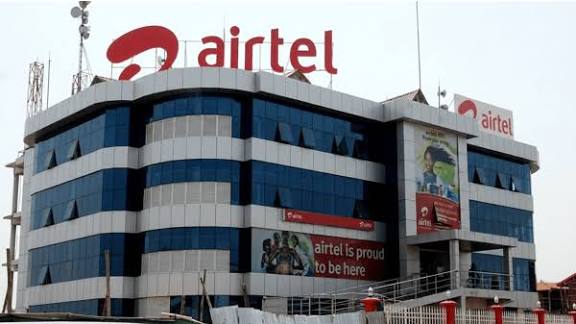
Airtel Nigeria has stepped up efforts to improve service quality nationwide after expanding its network sites by 15.5 per cent and unveiling plans to roll out 5G services across 20 major cities.
The telecom operator disclosed this during its first media roundtable of 2026, where executives outlined strategies focused on network scale, deeper coverage and stronger resilience.
Chief Executive Officer, Dinesh Balsingh, said the company has invested heavily over the last two years to strengthen performance and customer experience across the country.
“Those investments are now translating into measurable improvements in performance, customer experience and reach, including underserved and hard-to-reach communities,” he said.
Network expansion
Since December 2023, Airtel has added 2,242 new network sites, bringing its total number of sites nationwide to about 16,711.
The company also completed capacity upgrades on 30 per cent of its sites in 2025, covering more than 5,000 locations.
As a result, 99 per cent of Airtel’s network now supports high-speed 4G broadband, making it one of the most extensive 4G networks in Nigeria.
Further upgrades are planned this year to meet rising data demand.
Stronger spectrum, better speeds
Chief Technology Officer, Harmanpreet Singh Dhillon, said Airtel has increased its 4G spectrum by 10MHz, allowing faster speeds, improved stability and better service in crowded areas.
“These actions help us deliver higher data throughput and more consistent performance,” he explained.
5G rollout in 20 cities
Airtel is also accelerating its 5G deployment, with the number of active 5G sites more than doubling in the last three months.
The next phase will connect Nigeria’s top 20 cities to ultra-fast 5G networks, with a large share of the company’s infrastructure becoming 5G-enabled within the year.
Satellite and fibre expansion
To serve remote and rural communities, Airtel has partnered with OneWeb and Starlink to provide satellite-powered connectivity.
The company recently announced Nigeria’s first Direct-to-Cell partnership with Starlink, which will allow users to stay connected even in deep rural areas and support access to digital and fintech services.
Airtel is also expanding its fibre network footprint by 25 per cent, covering more cities and states.
In addition, the operator plans to launch a second internet submarine cable breakout point from the South-South region through the 2Africa submarine cable, reducing Nigeria’s reliance on Lagos as the only landing point.
The new breakout will operate from Kwa Ibo, Akwa Ibom State.