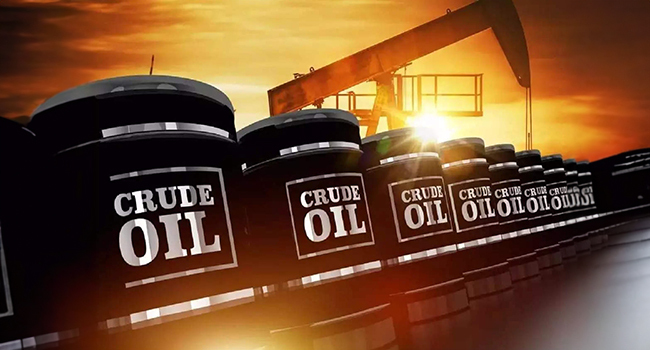
Nigeria’s crude oil production declined slightly in December, underperforming several of its peers within the Organisation of Petroleum Exporting Countries (OPEC) at a time when falling global oil prices are intensifying fiscal pressure on oil-dependent economies.
According to OPEC’s January 2026 Monthly Oil Market Report, Nigeria produced 1.422 million barrels per day (bpd) in December, down from 1.436 million bpd recorded in November. The 14,000 bpd month-on-month decline, based on direct communication with member countries, may appear modest, but analysts say it is significant given Nigeria’s fragile production recovery.
The dip comes as Nigeria continues to struggle well below its budget benchmarks. Crude oil output remains about 400,000 bpd short of the production assumption in the 2026 federal budget, underscoring persistent structural challenges in the upstream sector.
Nigeria also failed to meet its 2.06 million bpd target in 2025, despite modest improvements earlier in the year. Production ended 2025 at around 1.4 million bpd, leaving a gap of over 600,000 bpd compared to budget assumptions. This shortfall has weighed heavily on government revenues, foreign exchange earnings, and fiscal planning.
OPEC Peers Record Gains
In contrast to Nigeria’s performance, several OPEC members recorded production increases in December, highlighting the country’s relative underperformance within the cartel. Saudi Arabia increased output by 34,000 bpd, Iraq by 72,000 bpd, Kuwait by 11,000 bpd, and the United Arab Emirates by 10,000 bpd during the same period.
These gains by key producers come at a time when global oil prices are softening, making volume performance increasingly critical for oil-exporting economies seeking to stabilise revenues.
Tougher Licensing and Regulatory Shift
Amid the production challenges, Nigerian authorities are signaling a tougher stance on upstream investments and licensing. At the 2025 oil and gas licensing pre-bid conference, the Nigerian Upstream Petroleum Regulatory Commission (NUPRC) emphasised that bid evaluations would be conducted strictly on technical capability, financial strength, and the ability to execute proposed work programmes.
The Commission stressed that commitments made during the bidding process would be binding and form the basis for post-award regulatory oversight. It also pledged to deliver faster and more predictable regulatory approvals, higher and more secure production levels, credible licensing processes, and world-class safety and governance standards.
These assurances signal what regulators describe as a shift toward efficiency, accountability, and measurable outcomes in Nigeria’s upstream oil and gas sector, which has long been plagued by delays, underinvestment, and licence hoarding.
Government Draws Line on Speculation
Reinforcing this position, Minister of Petroleum Resources (Oil), Heineken Lokpobiri, declared that Nigeria would no longer tolerate the speculative acquisition of petroleum licences.
Lokpobiri stressed that oil and gas assets must not be treated as status symbols, noting that petroleum licences remain the property of the Federal Government and are issued strictly for development within clearly defined timelines.
“Licences held without execution add no value to either investors or the Nigerian economy,” the minister said, warning that investors would only be taken seriously based on clear parameters such as technical competence, financial capacity, and the ability to deliver on commitments made during the licensing process.
He further warned that the era of holding oil assets purely for speculation “is gone forever” in Nigeria.
No Post-Bid Concessions
The minister also ruled out post-bid concessions, making it clear that the government would not entertain requests for refunds, asset exchanges, or discretionary remedies after bids had been concluded. Such practices, he noted, are not provided for under Nigerian law.
As Nigeria grapples with declining production, volatile oil prices, and rising fiscal pressures, the government’s harder regulatory posture reflects an attempt to restore credibility, attract serious investors, and translate licences into actual barrels.
Whether these reforms can reverse Nigeria’s production decline and close the widening gap between targets and reality remains a key question for Africa’s largest oil producer in 2026.