The Niger Delta Development Commission (NDDC) has reaffirmed its commitment to sustaining strong collaboration with security agencies to maintain peace, protect critical national assets, and accelerate development across the Niger Delta region.
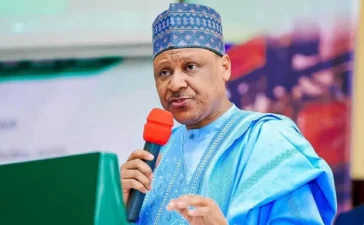
The NDDC Managing Director, Dr. Samuel Ogbuku, gave the assurance when the Flag Officer Commanding, Central Naval Command, Rear Admiral Suleiman Ibrahim, paid him a courtesy visit at the Commission’s headquarters in Port Harcourt.
This was disclosed in a statement issued on Friday in Port Harcourt by the NDDC Director of Corporate Affairs, Seledi Thompson-Wakama.
Ogbuku stressed that security and development are closely linked, noting that meaningful development cannot thrive in an atmosphere of insecurity, while underdevelopment often fuels insecurity.
“At the NDDC, we have established a robust working relationship with security agencies across the region because we believe that security and development are intertwined,” he said.
“Without security, communities cannot develop, and when communities are underdeveloped, insecurity is bound to thrive.”
The Managing Director said the Commission’s support for security agencies aligns with President Bola Tinubu’s directive to ensure peace and security nationwide. He added that the Niger Delta remains one of the most peaceful regions in the country due to sustained security efforts.
“All that we do in the Niger Delta is in line with Mr. President’s mandate. Security support is a collective responsibility involving host communities, the government, and institutions like the NDDC,” Ogbuku stated.
He assured the Nigerian Navy of the Commission’s readiness to deepen engagement and provide strategic interventions to address operational challenges faced by security agencies.
“What we have done so far is only a prelude to what is to come. We will keep the lines of communication open and undertake visits to better understand your challenges,” he said.
Earlier, Rear Admiral Ibrahim commended the NDDC for its visible and impactful interventions across the Niger Delta, describing the Commission’s projects as clear evidence of development under the current management.
“Since the assumption of office of the Managing Director, we have witnessed remarkable development across the region,” he said.
He highlighted several NDDC-funded projects, including solar streetlights, inverter installations, naval base infrastructure, and the construction of a secondary school for the Nigerian Navy.
Ibrahim also disclosed that the Navy recently launched “Operation Sentinel” to support crude oil exploration, production, and transportation, in line with national economic objectives.
With plans by the Nigerian Upstream Petroleum Regulatory Commission to raise crude oil production to 2.5 million barrels per day by 2027, he said sustained collaboration with the NDDC would be critical.
“If this target is achieved, the NDDC will be a major beneficiary, while the people of the Niger Delta will gain directly through increased development projects,” Ibrahim said, calling for expanded support to strengthen security operations.