In a narrow lane in Mumbai’s upmarket Colaba area, small concrete cubicles dot a patch of land where washermen clean and dry the city’s laundry. Around them, shanties painted in bright reds, blues, greens, and yellows stack like uneven Tetris blocks—home to the families who live and work there.
Amid this maze is a small learning centre offering free lessons in basic math and language skills. Run by the Rouble Nagi Art Foundation (RNAF), the centre helps children access formal education for the first time or return after dropping out.
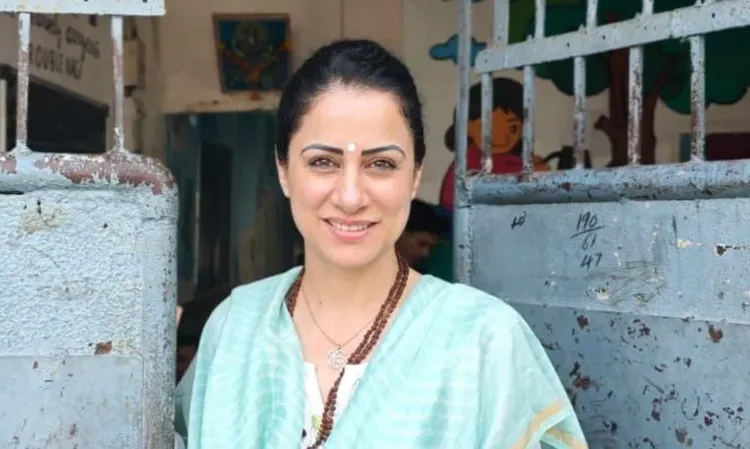
The non-profit was founded by 45-year-old artist Rouble Nagi, who has spent three decades bringing education to India’s most marginalised communities. Earlier this month, she was awarded the Global Teacher Prize—a $1 million accolade by the Varkey Foundation and UNESCO—selected from 5,000 nominations across 139 countries.
Through RNAF, Nagi has established over 800 learning centres across more than 100 underserved communities and villages. She says her mission began unexpectedly when a boy from a Mumbai slum attended one of her art workshops and shared that he could not afford school. Inspired, Nagi began painting murals in his community, attracting children who soon wanted to hear stories and learn.
“Learning can happen anywhere. You just have to make it interesting,” Nagi explains, noting that not all centres are traditional classrooms—some classes take place outdoors, with children seated on mats. Volunteers provide skill-based lessons, while donations supply books, bags, and other essentials.
Challenges persist, she admits, as many children come from dysfunctional families. Teachers often serve as mentors and protectors, with volunteers visiting homes if a child misses classes. Parental engagement is also key, helping students complete schooling and even pursue higher education.
Former student Mayur now runs his own art classes and printing business, volunteering with RNAF to give back to his community. Nagi’s ‘Misaal’ project further transforms slums into open-air classrooms, painting educational murals on walls covering topics from science and hygiene to social responsibility.
With the Global Teacher Prize, Nagi plans to expand her foundation’s reach, starting in Jammu and Kashmir, her childhood home, with a new skill-cum-learning centre equipped with computers.
Back in Colaba, the walls of the learning centre and surrounding shanties burst with colour and inspiration. Seven-year-old Khushi dreams of becoming a teacher, while her mother, a domestic worker, supports the family alone. Like Khushi, many children from similar backgrounds nurture big ambitions, and Nagi’s centres are helping turn those dreams into reality.