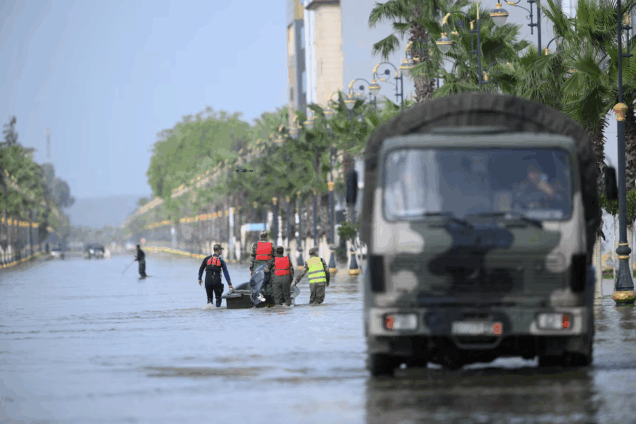
Morocco plans to spend 3 billion dirhams ($330 million) to upgrade infrastructure and support communities hit by severe flooding in the country’s northwestern plains, the prime minister’s office announced on Thursday.
Weeks of heavy rain, combined with releases from overflowing dams, have inundated villages, farmland, and the city of Ksar El Kebir, displacing 188,000 people and submerging 110,000 hectares of farmland, according to official figures. The government has officially declared the most affected municipalities as disaster areas.
Of the total relief fund, 1.7 billion dirhams will go toward repairing roads, hydro-agricultural networks, and other basic infrastructure. The remaining resources will support rehousing, reconstruction of destroyed homes, aid for small businesses, and assistance to farmers and livestock breeders.
Authorities, backed by the army, have established camps for evacuees and deployed helicopters and rescue boats to affected areas. Access to Ksar El Kebir remains restricted after the Loukkos River burst its banks, flooding several neighborhoods.
Water Minister Nizar Baraka explained that the Oued Makhazine dam, which reached 160% of capacity, had to gradually release water downstream to manage inflows. Winter rainfall this year was 35% above the average recorded since the 1990s and three times higher than last year. Snow cover in the Atlas and Rif mountains reached a record 55,495 sq km before shrinking to 23,186 sq km, contributing to dam replenishment.
Morocco’s national dam-filling rate has risen to nearly 70% from 27% a year earlier, with several large dams partially emptied to absorb new inflows. Officials noted that the exceptional rainfall has effectively ended a seven-year drought that had previously pushed the country to invest heavily in desalination projects.