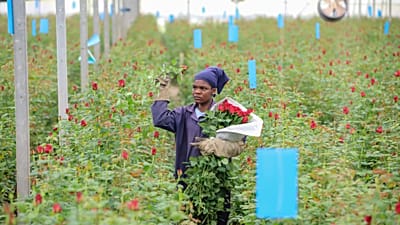
Kenya’s floriculture industry is facing severe losses due to the ongoing conflict in the Middle East, with growers reporting up to $1.4 million in weekly setbacks. The sector, valued at over $800 million by the Central Bank of Kenya, has been impacted by both declining demand and shipping disruptions to the Middle East and Europe.
At Isinya Flower Farms, located 56 kilometres south of Nairobi, Marketing Manager Anantha Kumar said exports have dropped by more than 50 percent. “Previously we used to export 450,000 stems per day and currently we are doing about 150,000 to 200,000 stems a day. So we are discarding almost 50 percent,” Kumar explained.
Direct exports to the Middle East account for about 30 percent of Isinya Flower Farms’ output and 15 percent nationally, with Europe remaining the largest market at roughly 70 percent. However, disruption of cargo freights to Europe has significantly affected the sector, pushing freight costs to nearly double previous rates and making operations unviable.
Kenya Flowers Council, the trade body representing flower growers and exporters, reported that the conflict has caused losses exceeding $4.2 million over the last three weeks. Chief Executive Officer Clement Tulezi said: “The Middle East remains a very important market and the disruption has an immediate impact on us. We see delays in movement of produce, longer routes, and extremely high pricing. Last week we were at $5.8 per kilo, the highest in 10 years, which is unsustainable.”
Tulezi added that approximately $2.1 million of the losses are due to flight shortages, while the remainder is caused by delays. “If this continues, we are looking at about $1.8 million in losses every week,” he noted.
Growers warn that if the conflict persists, the sector could face conditions similar to the Covid-19 period, potentially resulting in significant job losses for the roughly 500,000 Kenyans employed directly in floriculture.
The Kenya Flowers Council is lobbying the Kenyan government to introduce direct cargo flights to Europe to stabilize exports and cushion growers against ongoing disruptions.