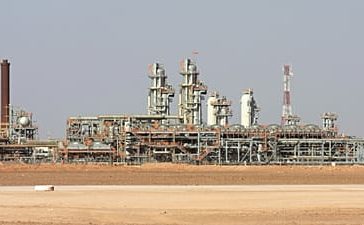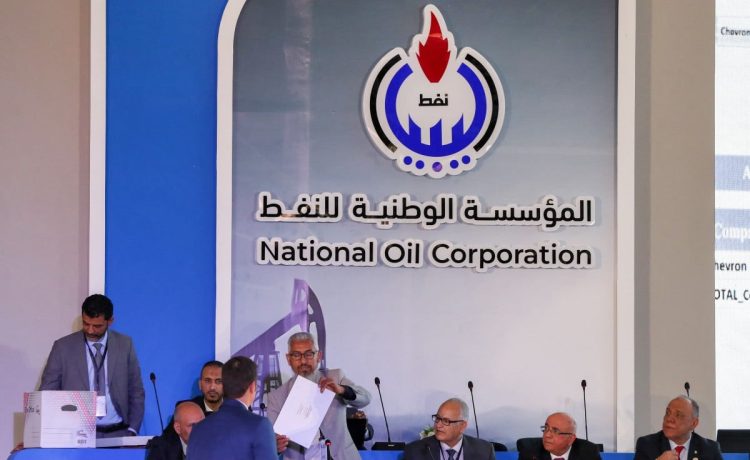
Libya has granted new oil exploration and production licences for the first time in 17 years, marking a significant step in efforts to revive its energy sector after years of political instability.
The licences were awarded on Wednesday as the North African nation seeks to attract major global energy companies back into its oil and gas industry. Production and exports are currently at their strongest levels since 2011.
The country’s oil sector has struggled since a NATO-backed uprising toppled and killed longtime leader Muammar Gaddafi in 2011. Libya remains divided between rival political authorities, creating uncertainty for investors.
Among the winners of the latest bidding round are US oil giant Chevron and Nigeria’s Aiteo, Africa’s largest privately-owned energy company.
Other successful bidders include consortiums comprising Spain’s Repsol and British Petroleum; Eni North Africa and QatarEnergy; and Repsol with Hungary’s MOLGroup and Turkiye Petrolleri.
However, only five out of 20 blocks offered for exploration and extraction attracted bids.
The National Oil Corporation (NOC) announced that another bidding round will be held later this year.
Analysts described the response as weaker than expected.
“The limited response to the licensing round is underwhelming for the NOC, especially given that dozens of companies — including prominent international oil companies — had pre-qualified,” said Hamish Kinnear of UK-based Verisk Maplecroft.
He noted that lingering concerns over political instability and insecurity in areas surrounding the blocks may have discouraged stronger participation.
Libya currently produces around 1.5 million barrels of oil per day and holds Africa’s largest proven oil reserves, estimated at 48.4 billion barrels.
Geoff Porter of North Africa Risk Consulting said the bidding outcome was “a considerable disappointment when measured against expectations.”
He suggested that companies may prefer direct negotiations with the NOC rather than participating in competitive tenders, citing a recent deal involving TotalEnergies and ConocoPhillips.
Last month, Libya signed agreements worth more than $20bn with TotalEnergies and ConocoPhillips to increase oil production over the next 25 years. Prime Minister Abdelhamid Dbeibah said the goal is to boost daily output by 850,000 barrels within that period.
Libya expert Jalel Harchaoui also described the bidding round as “no great success,” suggesting that private, one-on-one negotiations between the government and major corporations may be taking place outside the formal bidding process.
He said companies such as ExxonMobil were already in discussions with Libyan authorities that could bypass structured tenders.
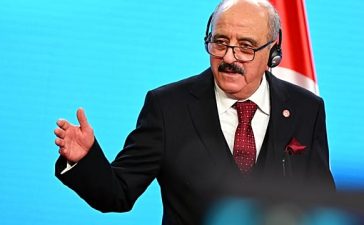
In response, NOC chief Masoud Suleman announced plans to establish a committee to review and improve bidding terms and negotiate with potential investors for unallocated blocks.
Despite the modest turnout, Suleman described the licensing round as a milestone.
“This is a return of trust and resuming institutional work in one of the country’s most important sectors after a long period of pause and challenges,” he said during the award ceremony.
“They are part of a broader national path that aims for prosperity, growth, and the return of normalcy.”