The government of Liberia has launched a diagnostic workshop aimed at identifying structural weaknesses in its national electricity system, marking a new phase in the sector’s reorganization.
The initiative, reported by New Dawn on February 27, is being carried out in partnership with the Millennium Challenge Corporation (MCC), a U.S. government foreign assistance agency. The workshop will examine key constraints affecting performance, including high electricity costs, infrastructure gaps, and governance challenges.
Findings from the workshop are expected to guide preparations for a potential second cooperation program, Compact II, following the conclusion of the initial MCC-Liberia compact in 2021.
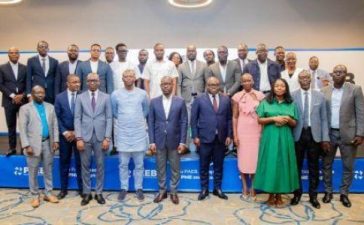
The workshop brings together government officials, representatives of the national electricity company, and technical and financial partners, whose conclusions are expected to inform future strategic decisions.
The sector remains under strain despite ongoing improvements. In November 2025, Agence Ecofin reported that Liberia had increased the share of renewable energy in its electricity mix to 33%, with renewables accounting for 70% of installed capacity growth since 2015.
Installed generation capacity remains limited, standing at around 126 MW as of September 2025, with the country relying on imports via the Côte d’Ivoire-Liberia-Sierra Leone-Guinea interconnection, a regional power exchange project.
Liberia’s regulatory framework has strengthened significantly, with the country ranking 9th out of 43 African nations in the African Development Bank’s 2024 Electricity Regulatory Index, scoring 0.803, up from 0.628 in 2022.