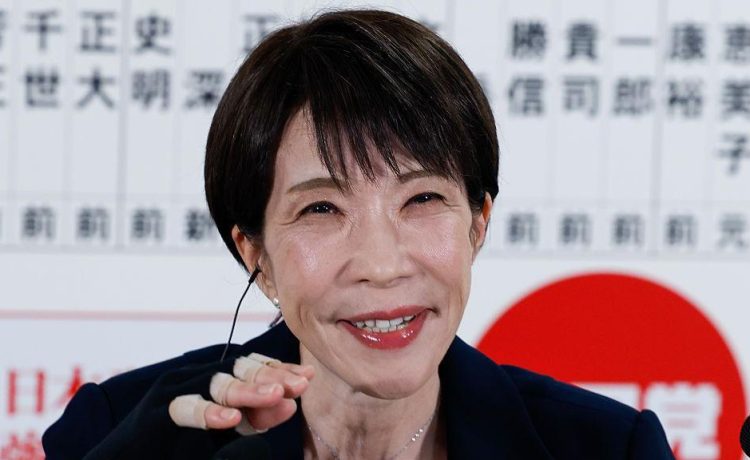
Japan’s ruling coalition, led by Prime Minister Sanae Takaichi, is on course for a sweeping victory in Sunday’s snap general election, according to projections by public broadcaster NHK.
Preliminary figures show the coalition winning 352 of the 465 seats in Japan’s House of Representatives, with Takaichi’s Liberal Democratic Party (LDP) alone securing 316 seats, enough for a clear majority.
Takaichi, Japan’s first female prime minister, called the snap election just four months after becoming party leader, seeking a decisive public mandate. Her apparent success marks a sharp turnaround for the LDP, which lost its parliamentary majority in 2024 amid corruption scandals, rising living costs, and the collapse of its long-standing coalition with Komeito.
The snap poll was widely viewed as a political gamble, with Takaichi previously pledging to step down if the party failed to win a majority. Instead, her personal popularity, with approval ratings consistently above 70%, appears to have powered the LDP’s resurgence.
According to NHK, the LDP’s current coalition partner, the Japan Innovation Party, is projected to win 36 seats, while opposition parties are expected to share 113 seats. When officially confirmed, the result will give Takaichi broad authority to pursue her conservative agenda.
International reactions were swift. US President Donald Trump congratulated Takaichi on her projected victory, describing her as “highly respected and very popular,” and wishing her success in advancing a “Conservative, Peace Through Strength Agenda.” US Treasury Secretary Scott Bessent called the outcome a “big victory,” while Indian Prime Minister Narendra Modi hailed the result as “landmark,” expressing confidence in deeper Japan–India ties.
Voters across Japan braved harsh winter conditions to cast their ballots in the country’s first mid-winter election in 36 years. Rare snowfall hit Tokyo, while dozens of train lines and ferry routes were suspended and more than 50 flights cancelled. Despite the weather, turnout appeared resilient, particularly among younger voters energised by Takaichi’s populist messaging and strong social media presence.
Takaichi has campaigned on higher public spending, tax cuts, tougher immigration controls, and a more assertive national security stance. She has also revived calls to revise Japan’s pacifist constitution, a long-held ambition that could gain traction if the coalition secures a two-thirds majority.
However, critics warn that her economic promises may be difficult to sustain given Japan’s already high government debt. Others have raised concerns about rising nationalism and strained relations with China, Japan’s largest trading partner, following her remarks on Taiwan and defence spending.
As final results are confirmed, Takaichi’s landslide victory is expected to reshape Japan’s political landscape, giving her one of the strongest mandates seen in recent decades.