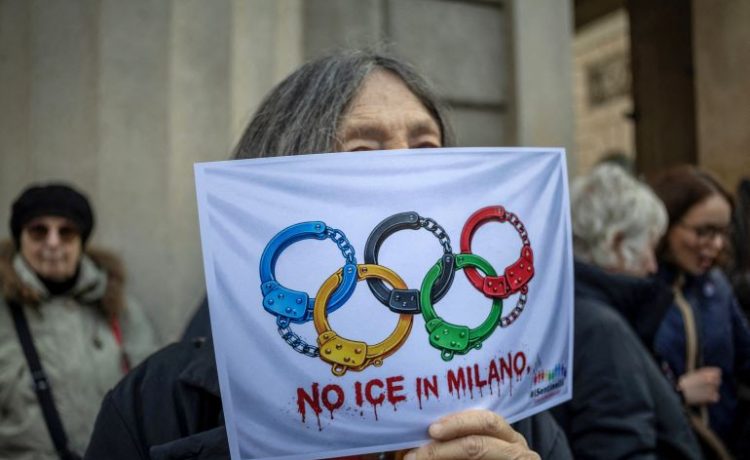
Italy’s Interior Minister Matteo Piantedosi has assured that US Immigration and Customs Enforcement (ICE) agents will have no operational role at the Milan-Cortina 2026 Winter Olympics, amid public concern over their presence.
Speaking in parliament on Wednesday, Piantedosi said ICE’s Homeland Security Investigations (HSI) unit will operate strictly within US diplomatic missions and “have no executive function” or enforcement authority in Italy. He dismissed outrage over the agents’ presence, calling it “completely unfounded.”
“The HSI investigates global threats, including the illegal movement of people, goods and weapons, and is separate from the department carrying out immigration enforcement in the US,” Piantedosi added. “ICE does not and will never be able to carry out operational police activities on our national territory.”
The US State Department and US ambassador to Italy, Tilman J. Fertitta, have emphasized that HSI agents will serve in an advisory and intelligence-based role, focusing on cybercrime and national security threats, without patrolling or enforcement duties.
Despite these reassurances, controversy continues, with Milan mayoral officials and local activists expressing concerns over the agency’s reputation. Even a pop-up hospitality house organized by US Figure Skating, USA Hockey, and US Speedskating changed its name from “Ice House” to “Winter House” amid the debate.
Italy is preparing a massive security operation for the Games, deploying 6,000 police officers and nearly 2,000 military personnel across sites stretching from Milan to the Dolomites. Security measures include bomb disposal teams, anti-terrorism units, snipers, and specialized ski patrols, supported by drones, radars, and 170 military vehicles.
Protests are expected during the Games’ opening weekend, including demonstrations by pro-Palestinian activists against Israel’s participation amid the war in Gaza, as well as environmental protests organized by groups such as the Unsustainable Olympics Committee, highlighting the ecological impact of Olympic infrastructure and artificial snow use.
With the Games set to open on February 6, Italy aims to balance heightened security and international participation while addressing both local concerns and global scrutiny.