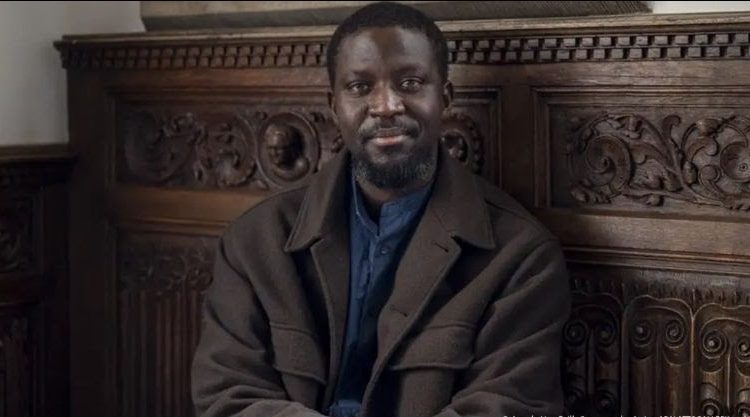
Ghanaian artist Ibrahim Mahama has reached a historic milestone, becoming the first African artist to top ArtReview’s Power 100 list, one of the most influential rankings in the global contemporary art world. The annual list recognizes individuals who shape the direction, discourse, and power structures of international art. Mahama’s ascent to the top is not just a personal achievement—it represents a broader transformation in who gets to define global culture and why their voices matter.
Mahama first captured international attention at the 2015 Venice Biennale, where he presented a monumental installation made from thousands of stitched burlap sacks. These sacks, once used to transport cocoa and other commodities central to Ghana’s colonial and postcolonial economy, became a powerful visual language. Draped across architectural spaces, they evoked histories of labor, exploitation, trade, and global inequality—issues often hidden behind the polished surfaces of international commerce.
What set Mahama apart was not only his choice of materials, but his collaborative process. The sacks bore marks, stains, and handwritten notes from workers who had used them, embedding lived experience directly into the artwork. By transforming these everyday objects into large-scale installations, Mahama challenged conventional ideas of value, authorship, and aesthetics in contemporary art.
Since Venice, Mahama’s reputation has grown steadily. His work has been exhibited at major institutions across Europe, the United States, and beyond, earning both critical acclaim and significant financial success. Yet, unlike many artists who channel success into private gain, Mahama has consistently reinvested his resources into public art and education in Ghana, particularly in the country’s northern regions.
He has founded and supported several cultural spaces, including repurposed industrial buildings turned into art centers, archives, and community institutions. These spaces provide opportunities for local artists, artisans, and researchers, while also preserving materials and histories often overlooked by global narratives. For Mahama, art is not confined to galleries—it is a tool for redistribution, learning, and collective empowerment.
Mahama often credits his worldview to his upbringing, which emphasized collectivity, shared labor, and social responsibility. This philosophy underpins both his artistic practice and his approach to success. Rather than seeing his recognition as an individual victory, he frames it as evidence of a shifting art world—one increasingly attentive to voices from the Global South and to practices rooted in social reality rather than market spectacle.
By topping the Power 100, Ibrahim Mahama has done more than make history. He has highlighted the growing importance of artists who engage with material histories, challenge inherited power structures, and invest in communities beyond the art market. His rise signals a future in which global art is not only more inclusive, but more accountable—to history, to labor, and to the people whose stories it tells.