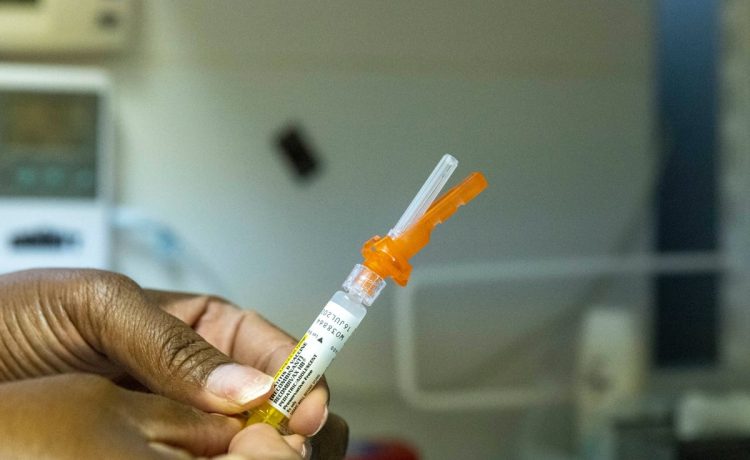
Guinea-Bissau has stopped a hepatitis B vaccine study funded by the Trump administration after international criticism over potential ethical violations and claims linking the vaccine to autism.
The West African nation, one of the region’s poorest, has high rates of hepatitis B. The proposed study, conducted by the Bandim Health Project of the University of Southern Denmark, aimed to enroll 14,000 newborns to investigate possible “non-specific effects,” including neuro-developmental disorders such as autism.
Under the trial, only half of the newborns would have received the vaccine at birth, with the remainder following the current schedule at six weeks. Critics, including the Tedros Ghebreyesus, said the study was unethical and raised concerns about withholding a life-saving vaccine from some infants.
Foreign Minister Joao Bernardo Vieira confirmed the study had been closed, citing objections from the scientific community and U.S. senators. “It’s not going to happen, period,” he said in an interview on Tuesday.
The U.S. Centers for Disease Control and Prevention (CDC) had approved a $1.6 million grant for the study, which followed recommendations by U.S. Health Secretary Robert F. Kennedy Jr., who controversially promoted theories linking vaccines to autism—claims widely rejected by scientific evidence.
Hepatitis B poses a significant health risk: about 90% of infants exposed at birth or during their first year develop chronic infection, and 15–25% of these die early from liver-related diseases. Guinea-Bissau currently provides the vaccine at six weeks and plans to introduce the birth dose in 2028.
Lead investigator Frederik Schaltz-Buchholzer lamented the politicization of the debate, warning that halting the trial could undermine public confidence in vaccines and health research, though the team hopes a revised proposal may be accepted in the future.
The Bandim Health Project has spent decades in Guinea-Bissau, aiming to understand both the benefits and risks of vaccines. Kennedy previously cited the project’s research when justifying cuts in U.S. funding to Gavi, which supports vaccine access in low-income countries.
The U.S. CDC did not respond to requests for comment.