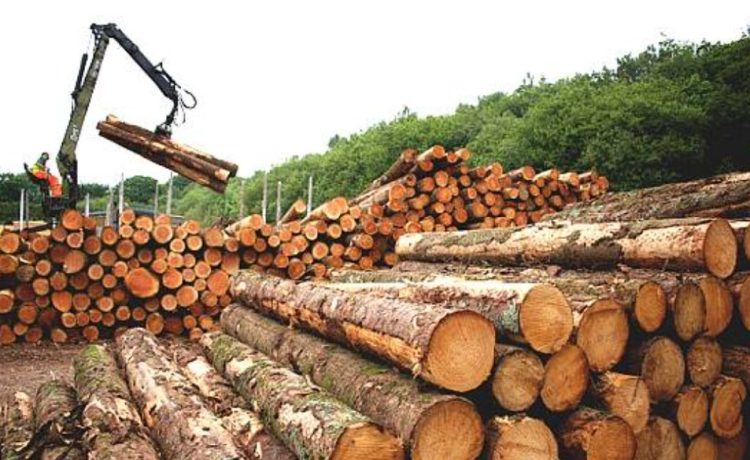
Ghana exported 217,000 cubic meters of wood and wood products in 2025, marking a 20% drop from 273,000 cubic meters in 2024, according to a report by the Timber Industry Development Division (TIDD). Export revenues fell 21% year-on-year to €98.38 million (approximately $116.3 million), representing the weakest performance in six years.
The report does not specify causes for the decline, but analysts cite sluggish global demand, competition from Brazilian softwoods, and a stagnant European market. After peaking at 343,000 cubic meters in 2022, Ghana’s timber exports have trended downward, totaling 1.66 million cubic meters and €763.07 million in revenue between 2020 and 2025.
Air-dried sawn wood was the leading export product (55% of volumes), followed by kiln-dried sawn wood (14%), plywood (11%), and logs (10%). The main species exported included teak, wawa/ayous, eucalyptus, cedrela, and gmelina, with Asia absorbing 63% of exports, Europe 17%, Africa 13%, the Americas 4%, and the Middle East 3%.
Despite the overall decline, exports to African markets improved, rising from 9% of total sales in 2024 to 11% in 2025, driven largely by ECOWAS countries. Plywood remained the top product for regional markets, with Togo, Burkina Faso, and Gambia leading purchases.
Speaking at the Africa Trade Summit 2026 in Accra, President John Dramani Mahama emphasised the need to deepen regional value chains, reduce dependence on external markets, and strengthen local industrial competitiveness. The uptick in regional demand offers a positive signal for Ghana’s forestry sector as it seeks to revive exports while meeting sustainability standards.