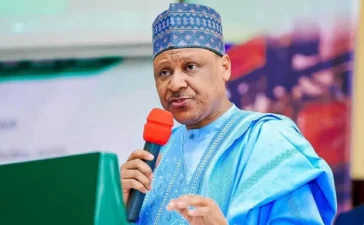
The Federal Government of Nigeria has announced a six-year moratorium on the establishment of new universities, polytechnics, and colleges of education, aimed at improving the quality and financial sustainability of existing tertiary institutions.
The announcement was made by the Education Minister Tunji Alausa following a Federal Executive Council (FEC) meeting in Abuja, chaired by President Bola Tinubu.
“We have lots of tertiary institutions, both public and private. We need to help these private institutions be sustainable financially,” Alausa stated.
The decision comes amid a persistent access challenge in higher education. Last year, over 2.3 million candidates applied for university admission through the Joint Admissions and Matriculation Board (JAMB), yet fewer than 228,000 secured places in public universities.
The moratorium follows the approval of 33 new universities in 2025 alone by the National Universities Commission (NUC), bringing the total number of universities in the country to 309.
In addition to the moratorium, FEC moved to tackle what Alausa described as a literacy crisis, restoring the National Commission for Mass Literacy, Adult and Non-formal Education (NMEC) to full independent status.
The commission has been tasked with educating more than 50 million young adults and equipping them with digital skills over the next two to three years. Alausa noted that “Today, we have about 56 million Nigerians that are illiterate. We can’t continue to have a high number of citizens that are illiterate.”
NMEC will expand its reach through radio, television, public advocacy, and community learning centres, with a particular emphasis on rural areas.
Other education-focused measures approved at Wednesday’s council meeting include amendments to the National Postgraduate Medical College Act, recognising medical fellowships as equivalent to a PhD for academic career progression, and comprehensive insurance coverage for the 180 federal unity schools across Nigeria.
The federal government’s policy shift signals a focus on strengthening existing education infrastructure, improving literacy, and ensuring equitable access to quality tertiary education nationwide.