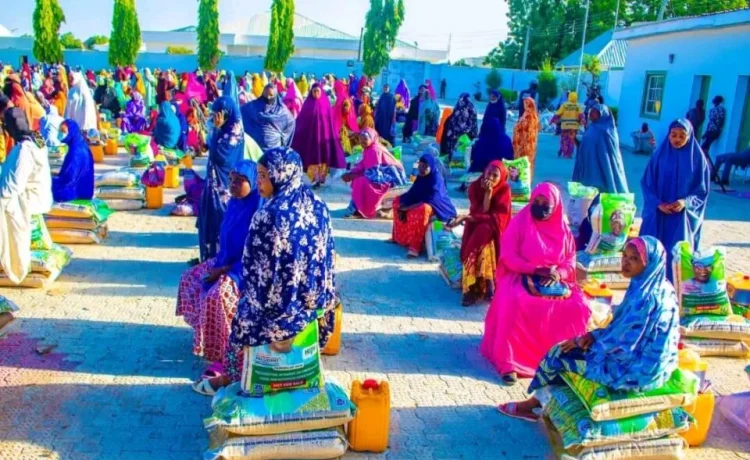
The Federal Ministry of Humanitarian Affairs and Poverty Reduction on Wednesday commenced the distribution of food items and relief materials to about 42,000 vulnerable individuals across the 17 local government areas of Yobe State.
The initiative forms part of the Presidential Emergency Food and Nutrition Intervention Programme, aimed at addressing hunger, malnutrition and poverty while supporting vulnerable populations across the country.
The intervention comes shortly after the state governor, Mai Mala Buni, approved the distribution of Ramadan palliatives to vulnerable households throughout the state.
The programme is being coordinated by the Yobe State Emergency Management Agency in collaboration with the Association of Local Governments of Nigeria to ease the economic hardship faced by residents during the holy month of Ramadan.
Officials confirmed that truckloads of rice and other essential food commodities have been dispatched to all 17 local government areas as part of the second phase of the state’s Ramadan support programme.
Speaking at the official flag-off ceremony held at the Yobe State Government House, the Minister of State for the ministry, Yusuf Sununu, described the intervention as a strategic response to growing humanitarian challenges across the country.
According to him, the combined impact of prolonged conflict and climate change has worsened poverty levels, increased food insecurity and heightened vulnerability, particularly among women, children, the elderly and persons living with disabilities.
Sununu explained that the programme targets internally displaced persons in camps and host communities, returning families, female-headed households, malnourished children, the elderly and persons with disabilities.
He added that the food baskets and nutrition packages are designed to address immediate dietary needs while providing temporary relief for affected households.
“This intervention is part of a broader national strategy focused on strengthening social protection mechanisms, enhancing community resilience and supporting the transition from emergency assistance to sustainable livelihoods,” he said.
Items distributed under the first phase of the programme include rice, beans, millet, maize, assorted grains, palm oil, cooking oil, tomatoes, seasoning cubes and salt.
The ministry’s Permanent Secretary, Olubunmi Olusanya, noted that the programme aims to reduce food insecurity and tackle nutrition-related challenges in 10 northern states most affected by conflict and vulnerability.
He also assured that strict accountability and monitoring mechanisms have been put in place to ensure transparency and proper distribution of the relief materials.
In his remarks, Governor Buni reaffirmed his administration’s commitment to addressing humanitarian challenges in the state.
“Providing food to vulnerable citizens is not merely an act of charity; it is a responsibility and an investment in a better future,” he said.
He added that the intervention aligns with the state government’s ongoing efforts to mitigate economic hardship and strengthen food security across all 17 local government areas.