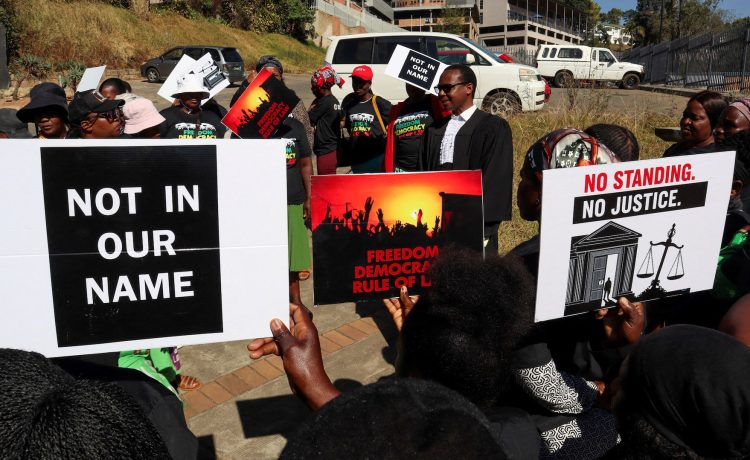
A court in Eswatini has ruled that the first five migrants sent there under a controversial deportation arrangement with the United States must be granted access to legal representation.
The decision affects migrants transferred from the United States to detention facilities in Eswatini following a $5.1 million agreement between both governments. The case forms part of a wider legal challenge to the policy implemented under the administration of Donald Trump.
The High Court rejected arguments from the Eswatini government that the detainees had not specifically requested representation from human rights lawyer Sibusiso Nhlabatsi, who has been attempting to act on their behalf without direct access to them.
Judges ruled that the migrants are entitled to legal counsel, marking a significant development in the ongoing dispute over their detention and rights.
However, the judgment currently applies only to the first five individuals who arrived in Eswatini, as the initial legal challenge was filed on their behalf. Lawyers argue the ruling could set a precedent for others held under the same arrangement.
Eswatini, an absolute monarchy led by King Mswati III, has so far released only two detainees — a Jamaican national last year and a Cambodian national more recently.
Legal representatives in both Eswatini and the United States have questioned the legality of the deportation agreement, arguing that individuals transferred under the deal had already served sentences for crimes committed on U.S. soil.
Although a local human rights case challenging the agreement itself was previously dismissed by the High Court, the decision is currently under appeal, keeping the broader legal questions unresolved.
The ruling adds further scrutiny to the bilateral arrangement as litigation continues over the rights and treatment of deportees held in Eswatini’s custody.